+86-0574-63316601


 中文简体
中文简体Content
- 1 Why Kitchen Wiring Harnesses Have Different Requirements
- 2 Branch Circuit Rough-In Wiring: NM-B and MC Cable
- 3 Appliance Wiring Harnesses: AWM-Rated Internal Connections
- 4 Power Cord Harnesses: Connecting Appliances to Outlet Circuits
- 5 Kitchen Circuit Requirements and Correct Harness for Each
- 6 High-Temperature Zones: Oven and Range Harness Specifications
- 7 Moisture-Resistant Harnesses for Sink and Dishwasher Areas
- 8 Commercial Kitchen Wiring Harnesses: Stricter Requirements
- 9 Connector and Terminal Types for Kitchen Harnesses
- 10 Quick-Reference Selection Guide
For a kitchen, you need wiring harnesses rated for high-temperature, moisture-resistant, and high-current applications — specifically UL-listed appliance wiring material (AWM) for built-in appliances, NM-B (Romex) or MC cable for branch circuit rough-in wiring, and dedicated appliance harnesses rated at 105°C or higher for connections near heat sources. The kitchen is the most electrically demanding room in a residential building: it combines high-draw appliances (ranges at 40–60A, refrigerators, dishwashers, microwaves), moisture from steam and spills, heat from cooking surfaces, and the need for GFCI protection on all countertop circuits. Using the wrong wire gauge, insulation rating, or connector type in a kitchen environment leads to insulation breakdown, nuisance tripping, fire risk, and code violation. This guide covers every circuit type in a kitchen and the correct wiring harness specifications for each.
Why Kitchen Wiring Harnesses Have Different Requirements
A kitchen imposes four simultaneous electrical stresses that no other residential room combines at the same intensity:
- High sustained current draw — an electric range draws 40–60 amps continuously during cooking; a standard 15A lighting circuit harness would overheat within minutes if used in its place
- Elevated ambient temperature — the area above and behind a range or inside an oven cavity can reach 150–200°C during normal operation; standard 60°C-rated wire insulation used elsewhere in the home would soften, crack, and potentially arc in these zones
- Moisture and steam exposure — steam from boiling, condensation on cold surfaces, and occasional liquid spills make moisture ingress a real risk for any connector or junction near countertop and sink areas
- Code-mandated GFCI and AFCI protection — NEC 2020 requires GFCI protection on all 15A and 20A, 120V kitchen countertop circuits and AFCI protection on all kitchen branch circuits; harness and connector selection must be compatible with these protective devices
Understanding these four stresses explains why kitchen wiring is not a single specification but a set of different harness types selected by location, load, and temperature zone within the kitchen.
Branch Circuit Rough-In Wiring: NM-B and MC Cable
The branch circuit wiring that runs inside walls and ceilings from the electrical panel to kitchen outlets and appliance connections is the foundation of the kitchen electrical system. This is not a plug-in harness — it is fixed wiring installed by an electrician — but specifying the correct type directly determines what appliance harnesses and outlets can safely be connected downstream.
NM-B Cable (Romex)
NM-B (Non-Metallic sheathed cable, 90°C conductor rating, 60°C ampacity in free air) is the standard residential branch circuit cable. The conductors are individually insulated in thermoplastic (THHN/THWN) rated at 90°C, though the NEC requires ampacity to be calculated at 60°C for NM-B due to its sheathing. NM-B is suitable for installation inside walls, ceilings, and floors in dry locations. Key gauges for kitchen circuits:
- 14 AWG / 15A — lighting circuits only; not permitted for countertop small appliance circuits per NEC 210.52(B)
- 12 AWG / 20A — required for all countertop small appliance circuits (minimum two required per NEC 210.52(B)(1)); also used for dishwasher and garbage disposal dedicated circuits
- 10 AWG / 30A — for microwave combinations, dryer circuits, and smaller electric ranges or range tops
- 8 AWG / 40A or 6 AWG / 55A — for full electric ranges and ovens; these circuits require 240V/2-pole breakers and 3-conductor + ground NM-B (black, red, white, bare)
MC Cable (Metal-Clad)
MC cable uses the same THHN/THWN conductors as NM-B but enclosed in a flexible interlocked aluminum or steel armor. It is preferred in commercial kitchens, restaurant settings, and residential applications where physical protection of the wiring is required (exposed runs, areas with pest risk, or local code requirements). MC cable also provides an additional ground path through the metal armor. For kitchen use, MC cable with 12 AWG conductors on 20A circuits is the standard in commercial food service installations. MCAP (MC with aluminum armor and polymer jacket) provides additional moisture resistance for wet kitchen environments.
Appliance Wiring Harnesses: AWM-Rated Internal Connections
Built-in kitchen appliances — ranges, ovens, dishwashers, refrigerators, microwaves, vent hoods — use internal wiring harnesses that connect the appliance's power supply entry point to its internal components (heating elements, motors, control boards, sensors). These internal harnesses are subject to UL 758 (Appliance Wiring Material) standards and must meet the temperature, voltage, and current requirements of the specific appliance zone in which they are installed.
AWM Style Numbers and Temperature Ratings
UL AWM style numbers define the insulation type, voltage rating, temperature rating, and applicable environments. For kitchen appliances, the most relevant ratings are:
| AWM Style | Temp. Rating | Voltage Rating | Insulation Type | Typical Kitchen Use |
|---|---|---|---|---|
| AWM 1015 | 105°C | 600V | PVC | Refrigerator, dishwasher, vent hood wiring away from heat zones |
| AWM 3266 | 105°C | 300V | Thermoplastic | Control board connections, sensor leads in microwaves and ovens |
| AWM 3321 / 3322 | 150°C | 300V | Silicone rubber | Oven cavity wiring, heating element leads, broiler connections |
| AWM 3289 | 200°C | 600V | PTFE (Teflon) | Self-cleaning oven wiring, high-temp element connections (>150°C zones) |
| AWM 5107 / 5128 | 105°C | 300V | PVC, Ribbon/flat | LCD display ribbon cables, control panel flat harnesses |
When replacing internal appliance harnesses, always match or exceed the original harness temperature rating. Substituting a 105°C AWM wire in a zone that reaches 150°C — such as near an oven bake element — will cause PVC insulation to soften and potentially short within the first few self-cleaning cycles. The original equipment manufacturer's service documentation specifies the required AWM style for each harness segment.
Power Cord Harnesses: Connecting Appliances to Outlet Circuits
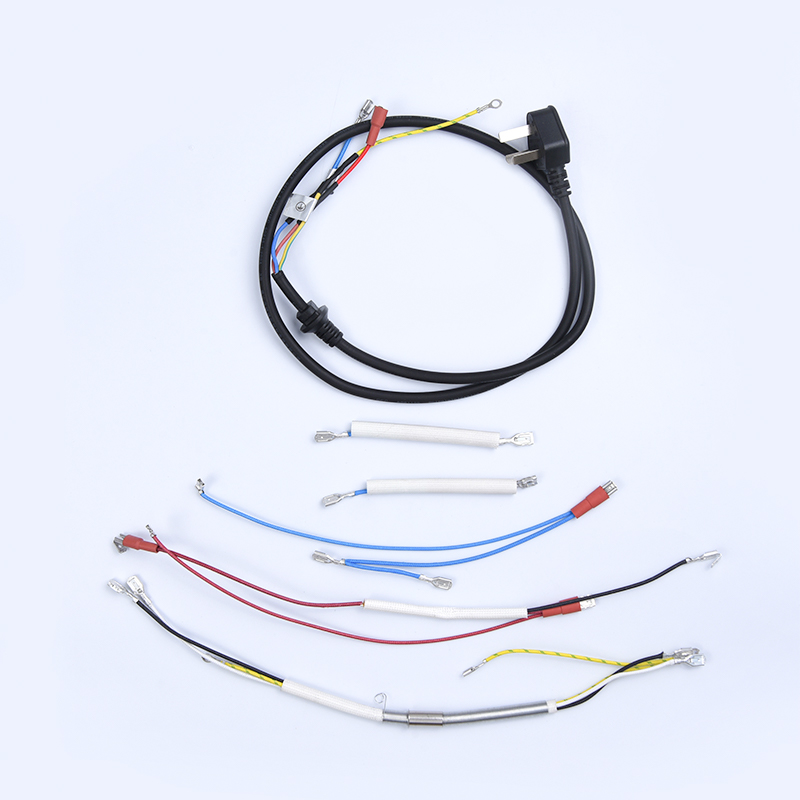
The power cord — the visible harness between the wall outlet and the appliance — must match both the appliance's current draw and the outlet type. Kitchen appliance power cords are governed by UL 817 (cord sets and power supply cords) and must use conductor gauges appropriate for their rated amperage.
Standard 120V Appliance Cords (15A and 20A)
Countertop kitchen appliances — toasters, coffee makers, blenders, stand mixers, instant pots — use standard 120V power cords with SVT, SJT, or SJO jacket types. SVT (Service, Vacuum, Thermoplastic) is the most common for light appliances; SJT (Service, Junior, Thermoplastic) provides heavier-duty insulation. For kitchen appliances that generate heat (toasters, toaster ovens), look for cords rated at 105°C or higher, not the standard 60°C cords used for lamps and electronics. Conductor size must match:
- 18 AWG / up to 10A — light appliances: coffee grinders, blenders under 1,000W
- 16 AWG / up to 13A — medium appliances: stand mixers, 1,200W toaster ovens, rice cookers
- 14 AWG / up to 15A — heavy countertop appliances: electric griddles, air fryers, 1,500–1,800W appliances on 15A circuits
- 12 AWG / up to 20A — high-draw countertop appliances on 20A circuits: commercial-grade blenders, large countertop ovens
240V Range and Oven Power Cords
Electric ranges and wall ovens require 240V power cords with specific configurations mandated by NEC and appliance standards. Modern code (NEC 250.140) requires 4-wire cords (3-conductor + separate ground) for ranges and dryers — the older 3-wire arrangement (which used the neutral as ground) is no longer permitted for new installations. Standard configurations:
- NEMA 14-30 / 30A / 4-wire cord — smaller electric ranges, countertop burner units; conductor: 10 AWG minimum
- NEMA 14-50 / 50A / 4-wire cord — full-size electric ranges with oven; conductor: 6 AWG minimum; this is the most common full-range configuration
- Cord length — range cords are typically 4–6 feet (1.2–1.8m) to allow the range to be pulled forward for servicing without disconnecting the cord
Range power cords must be rated at 250V minimum and carry a UL listing specifically as a range cord. General-purpose 240V cords (such as those used for air conditioners or power tools) are not rated for the continuous high-current duty cycle of a range and must not be substituted.
Kitchen Circuit Requirements and Correct Harness for Each
| Kitchen Circuit | Voltage | Breaker | Wire Gauge | Cord / Harness Type | Protection Required |
|---|---|---|---|---|---|
| Small appliance (countertop) ×2 minimum | 120V | 20A | 12 AWG NM-B | SJT or SVT 14–16 AWG appliance cord | GFCI + AFCI |
| Refrigerator (dedicated) | 120V | 20A | 12 AWG NM-B | Appliance cord with NEMA 5-20P plug, 16–14 AWG | AFCI (GFCI optional) |
| Microwave (dedicated) | 120V | 20A | 12 AWG NM-B | Appliance cord 12–14 AWG, SJT or HPN jacket | GFCI + AFCI |
| Dishwasher (dedicated) | 120V | 20A | 12 AWG NM-B | Direct wire or 12 AWG appliance cord; water-resistant jacketed preferred | GFCI + AFCI |
| Garbage disposal (dedicated) | 120V | 15–20A | 14–12 AWG NM-B | Disposal power cord kit, 16 AWG SJTW with NEMA 5-15P | GFCI + AFCI |
| Electric range / freestanding | 240V | 50A 2-pole | 6 AWG NM-B or 6 AWG MC | NEMA 14-50 4-wire range cord, 6 AWG, 250V rated | AFCI recommended |
| Wall oven (built-in) | 240V | 30–50A 2-pole | 8–6 AWG NM-B or MC | Direct wire with 90°C or 105°C rated internal pigtail | AFCI recommended |
| Kitchen lighting | 120V | 15–20A | 14–12 AWG NM-B | Fixture wiring: 105°C AWM internal leads | AFCI |
High-Temperature Zones: Oven and Range Harness Specifications
The interior of an oven and the area directly beneath and behind a range cooktop represent the most thermally demanding wiring environments in any residential application. Wiring harnesses in these zones must survive temperatures far beyond what standard building wire or appliance cords experience.
Oven Cavity Wiring
Wiring that enters or passes through the oven cavity — to thermostats, element connectors, or temperature probes — must be rated for the maximum oven air temperature, which reaches 260°C (500°F) in self-cleaning mode. Standard oven element lead wire uses high-temperature fiberglass-braided or PTFE-insulated conductors rated at 200–260°C. Nichrome element lead wires connect at terminals inside the oven cavity using ceramic or high-temperature polymer connectors. Under no circumstances should standard PVC-jacketed wire enter the oven cavity — it will melt within minutes of operation.
Behind-the-Range and Under-Cooktop Wiring
The area beneath gas or electric cooktop burners and in the anti-tip space behind the range experiences temperatures of 80–150°C depending on proximity to burners and ventilation. Harnesses in this zone should use silicone-insulated wire (AWM Style 3321/3322, rated 150°C) or cross-linked polyethylene (XLPE) insulation. The igniter harnesses on gas ranges — which route from the control knob switch to each burner igniter — are particularly vulnerable to heat damage and are a common source of failed ignition; these should always be replaced with silicone-jacketed harnesses of the same gauge when worn.
Self-Cleaning Oven Wiring Considerations
Self-cleaning ovens lock the door and heat the cavity to 480–500°C (900°F) to oxidize food residue. This extreme temperature creates a very short-duration thermal event that can damage marginally rated internal wiring even when the wiring is outside the cavity. Door latch solenoid wires, thermostat leads, and control board connections that pass through the oven body must be routed away from the highest temperature paths and rated appropriately. OEM service documentation specifies routing and minimum ratings; deviating from these during appliance repair is a fire risk.
Moisture-Resistant Harnesses for Sink and Dishwasher Areas
The sink and dishwasher area is the highest-moisture zone in the kitchen. Wiring and harnesses here face condensation, steam from the dishwasher exhaust, and occasional water drips from plumbing leaks.
- Dishwasher power connection — most dishwashers accept a hardwired direct connection via a junction box mounted to the cabinet; the wire entering the dishwasher's terminal box should be 12 AWG NM-B with a liquid-tight connector at the appliance entry point to prevent moisture tracking up the cable into the junction box
- Garbage disposal cord — disposal power cord kits use SJTW jacketing (Service, Junior, Thermoplastic, Weather-resistant) which is moisture-resistant; standard SJT without the W suffix is adequate for dry indoor use but SJTW is preferred under sinks where drip exposure is realistic
- Under-sink outlet boxes — outlets installed inside sink base cabinets for garbage disposals or instant hot water dispensers should be protected by GFCI and mounted in an enclosure with a cover plate; the outlet's wiring should not rest on the cabinet floor where puddles could form
- Connector waterproofing — any connector or splice in the under-sink area should use waterproof wire nuts (filled with silicone gel) or heat-shrink solder connectors rather than standard twist-on wire nuts, which allow moisture to wick into the conductor bundle
Commercial Kitchen Wiring Harnesses: Stricter Requirements
Commercial kitchen wiring is governed by NFPA 96 (Standard for Ventilation Control and Fire Protection of Commercial Cooking Operations) and local health department codes in addition to NEC. The requirements are substantially more stringent than residential:
- All wiring in cooking areas must be in metallic conduit or MC cable — exposed NM-B is not permitted in commercial kitchens; EMT (Electrical Metallic Tubing) or rigid conduit with THWN-2 conductors is the standard for all runs in cooking and food preparation areas
- THWN-2 conductors — rated at 90°C wet and dry, THWN-2 is the required conductor type inside conduit in commercial kitchen environments; standard THWN (not -2) is rated at 75°C wet and is less suitable
- Flexible connections — where flexible connection to commercial cooking equipment is required (to allow equipment cleaning by pulling the unit forward), liquid-tight flexible metal conduit (LFMC) with THWN-2 conductors is used, not standard flexible cord; LFMC provides physical protection and grease resistance that cord sets cannot
- High-temperature appliance connections — commercial ovens, combi ovens, and fryers may require 600V-rated, 105°C minimum appliance wiring at the equipment terminal block; silicone or PTFE insulation is frequently specified by commercial appliance manufacturers for equipment connections near open flames or high heat
- Grease-resistant jacketing — wiring in the exhaust hood plenum or duct area must resist grease penetration; standard PVC jackets absorb grease over time, causing insulation softening; PTFE or grease-resistant cross-linked insulations are specified for these zones
Connector and Terminal Types for Kitchen Harnesses
The connectors used to terminate kitchen appliance harnesses must match both the wire gauge and the operating environment. Poor connector selection is a leading cause of kitchen wiring failures — loose connections arc, generate heat, and ignite adjacent materials.
Push-In and Lever Connectors (Wago-Type)
WAGO 221 series lever connectors and similar push-in connectors have become widely used in residential kitchen wiring for junction splices. They are UL listed for 14–28 AWG solid and stranded conductors and rated for 600V, 32A, and 85°C ambient temperature. They are faster to install than twist-on wire nuts and provide more consistent contact quality — the lever locks the conductor against a bus bar rather than relying on the twist tension of wire nuts, which can loosen over time. For under-cabinet junctions and outlet box connections in kitchen remodels, lever connectors are a reliable choice.
High-Temperature Appliance Connectors
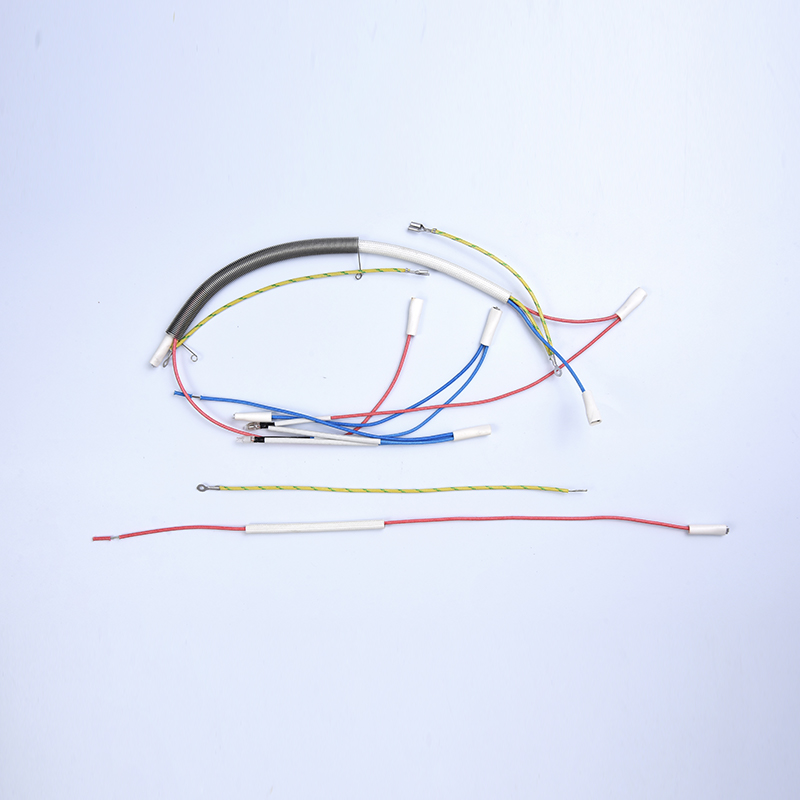
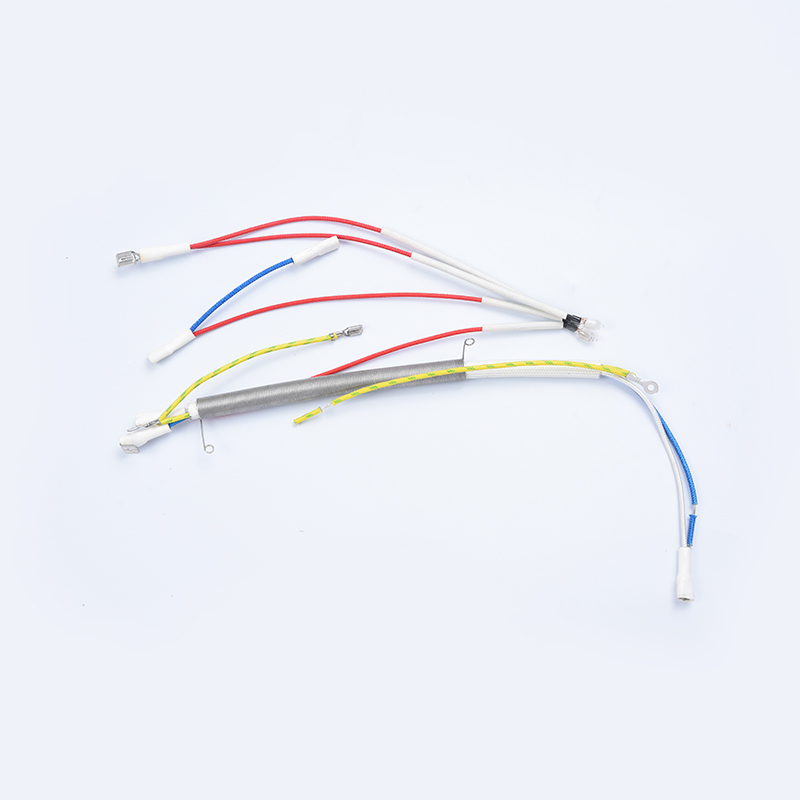
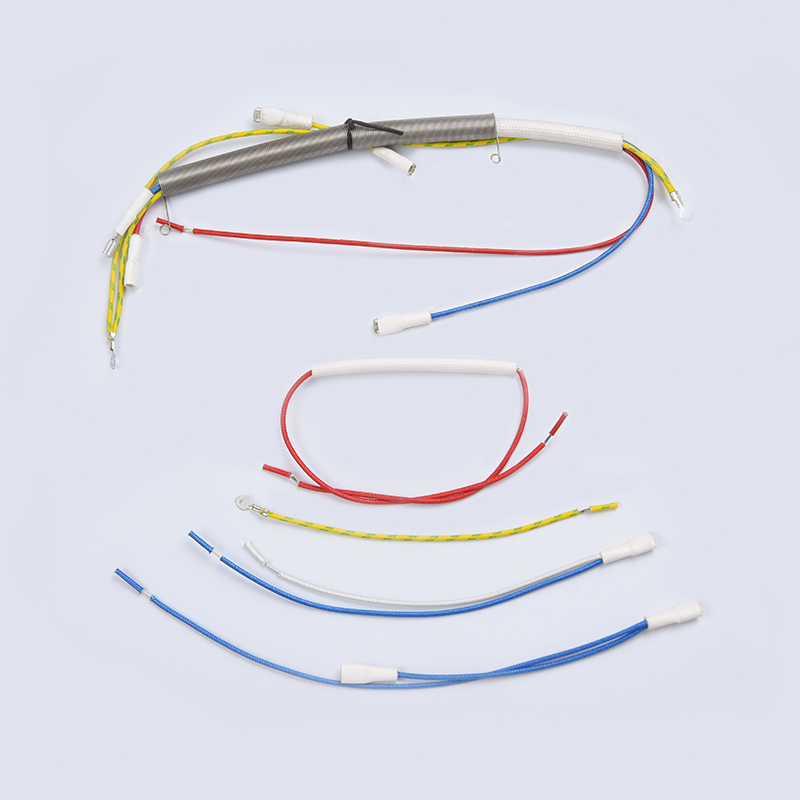
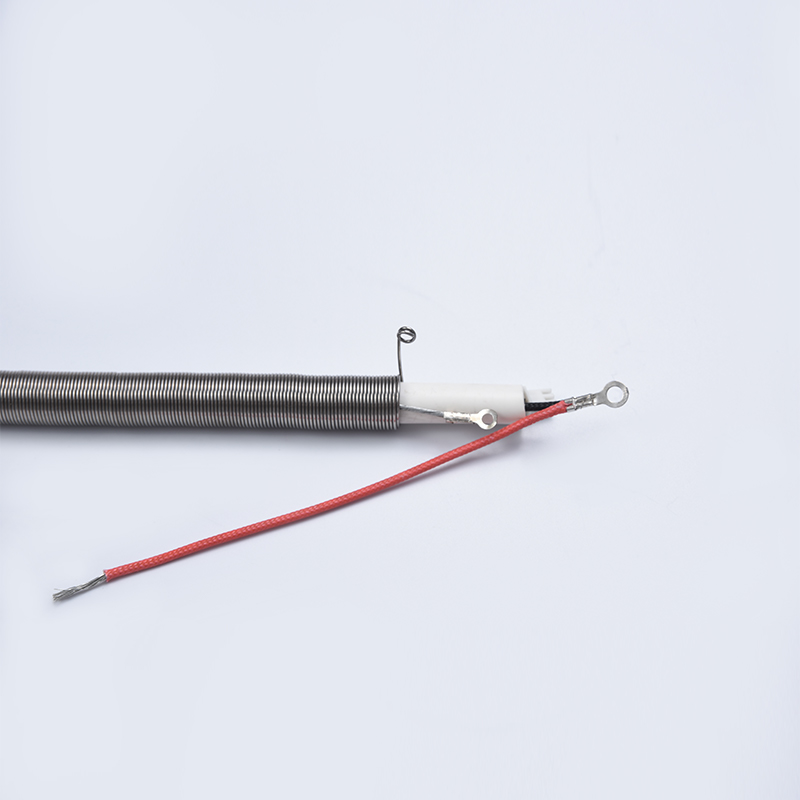
Internal appliance connections in heat zones use spade terminals, bullet connectors, or blade connectors with housings rated at 105°C to 200°C. Standard nylon connector housings rated at 85°C will melt in oven-adjacent applications. Molex-style connectors used on oven control boards are typically rated at 105°C and must be replaced with equivalent-rated connectors if the harness is serviced. For heating element connections, ceramic or porcelain terminal blocks are used where temperatures exceed what any polymer housing can withstand.
Crimp vs. Solder Connections
In kitchen appliance harnesses, crimped connections are strongly preferred over soldered joints for all current-carrying conductors. Solder has a relatively low melting point (180–220°C for common tin-lead solder; ~220°C for lead-free) and can cold-flow under sustained vibration and thermal cycling — creating high-resistance joints that overheat. Professional crimp connections made with the correct die maintain consistent contact resistance and mechanical strength throughout the appliance's service life. Heat-shrink tubing over crimps provides insulation and strain relief that bare crimps lack.
Quick-Reference Selection Guide
Use this decision framework when selecting wiring harnesses for any kitchen application:
- Identify the temperature zone. Is the harness in an ambient-temperature area (under counters, inside cabinets away from heat)? Use 105°C AWM or SJT/NM-B. Is it adjacent to a heating element or inside an oven body? Use 150°C silicone or 200°C PTFE insulation minimum.
- Determine the current load. Calculate total wattage ÷ voltage to get amperage. Select conductor gauge from: 18 AWG ≤10A, 16 AWG ≤13A, 14 AWG ≤15A, 12 AWG ≤20A, 10 AWG ≤30A, 8 AWG ≤40A, 6 AWG ≤55A.
- Check moisture exposure. Will the harness be in a wet or damp location (under sink, near dishwasher)? Upgrade to SJTW cord jacket, liquid-tight fittings, and waterproof connectors. Use GFCI protection on the circuit.
- Confirm voltage rating. 120V circuits: 300V-rated AWM is adequate for internal harnesses; 600V for cord sets. 240V circuits: all wiring, cords, and connectors must be rated 600V minimum.
- Verify UL listing. All replacement harnesses and cords for kitchen use should carry a UL or ETL listing. Unlisted harnesses from unverified sources lack the testing verification that kitchen's demanding thermal and electrical environment requires.
- Match connector temperature rating to the zone. Standard nylon connectors (85°C) in ambient zones. High-temp nylon or ceramic (105–200°C) for any connection within 6 inches of a heat source. Never use standard twist-on wire nuts inside appliances — use rated appliance connectors.