+86-0574-63316601


 中文简体
中文简体Content
- 1 The Key Environmental Threats Wiring Harnesses Must Withstand
- 2 Conductor Materials and Insulation for Environmental Service
- 3 Environmental Connector Technology: Sealing Systems and IP Ratings
- 4 Protective Coverings and Bundling Materials
- 5 Environmental Zones and Harness Specification by Location
- 6 Splice and Termination Protection in Environmental Harnesses
- 7 EMI Shielding in Environmental Wiring Harnesses
- 8 Testing and Validation of Environmental Wiring Harnesses
- 9 Environmental Wiring Harnesses in Specific Industries
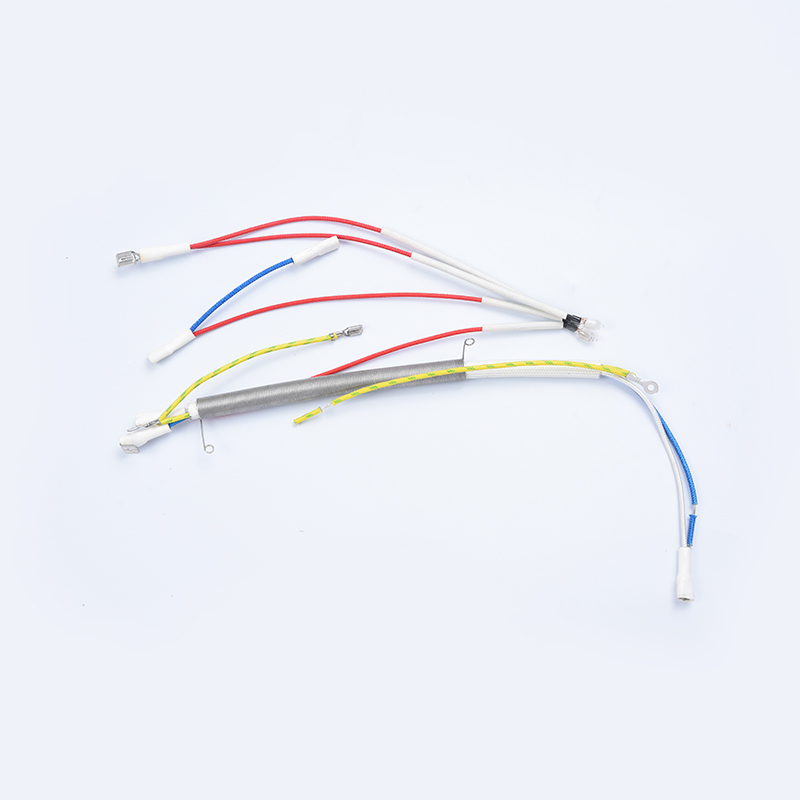
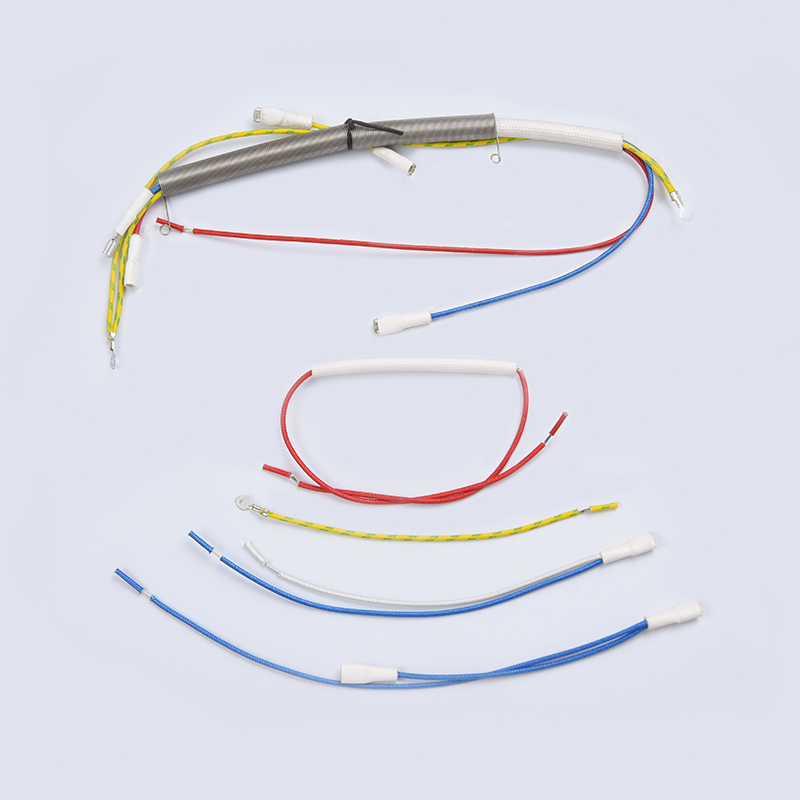
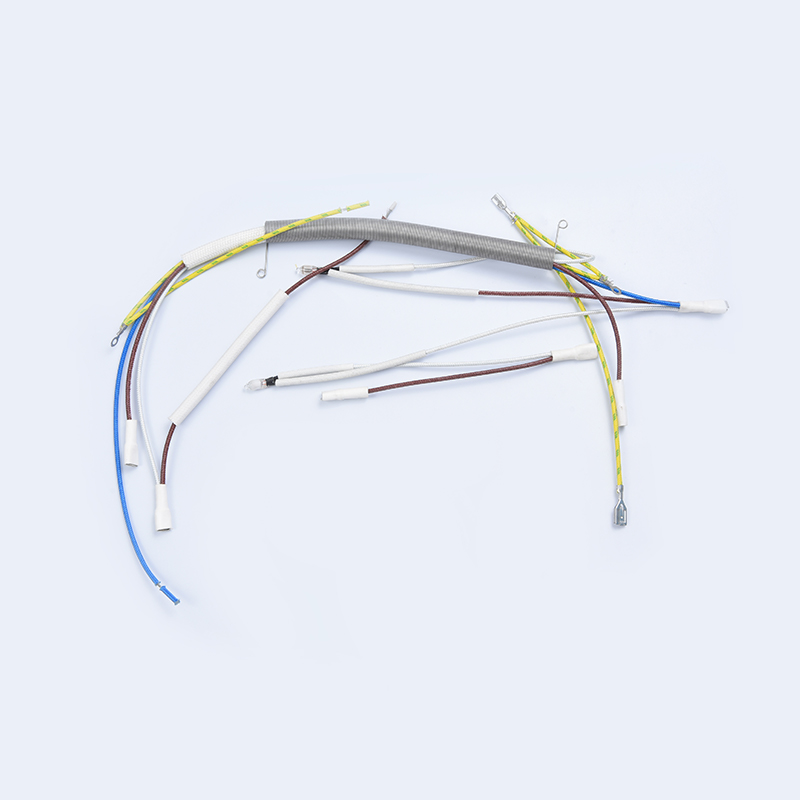
An environmental electrical wiring harness is a bundled assembly of insulated conductors, connectors, protective coverings, and routing hardware specifically engineered to maintain reliable electrical performance when exposed to harsh environmental conditions — including moisture, extreme temperatures, chemical exposure, UV radiation, mechanical vibration, and abrasion. The "environmental" designation indicates that every material, connector seal, and protective covering in the harness has been selected and validated to resist the specific environmental stressors of its intended application, rather than relying on controlled indoor conditions to preserve function.
Environmental wiring harnesses are essential components in automotive systems, marine vessels, agricultural machinery, construction equipment, renewable energy installations, military platforms, and industrial automation — anywhere that electrical systems must function reliably outside the protection of a building enclosure. Harness failure in these environments causes equipment downtime, safety hazards, and repair costs that frequently exceed the original harness cost by a factor of 10 or more. The global automotive wiring harness market alone exceeded $60 billion in 2023, with environmental harnesses representing an increasingly dominant segment as electrification and connectivity expand into demanding outdoor environments.
The Key Environmental Threats Wiring Harnesses Must Withstand
Before examining how environmental harnesses are constructed, it is essential to understand what they are protecting against. Each environmental threat attacks harness integrity through a different mechanism — and a harness specification that addresses one threat may be completely inadequate against another.
Moisture and Fluid Ingress
Water, coolant, hydraulic fluid, and cleaning agents entering a harness connector or conductor bundle cause galvanic corrosion, insulation resistance degradation, and short circuits. Connector corrosion is the leading cause of electrical system failures in automotive and marine applications, with studies from the automotive industry indicating that over 50% of electrical warranty claims trace to connector interface degradation. Even small amounts of moisture trapped inside a sealed connector can create electrochemical cells that corrode terminal plating within weeks in warm environments.
Temperature Extremes
Automotive underhood harnesses experience temperatures from -40°C to +150°C across a single operating cycle. Insulation materials that become brittle at low temperatures crack under vibration; insulations that soften at high temperatures allow conductor migration and short circuits. Thermal cycling — the repeated expansion and contraction of dissimilar materials — creates mechanical stress at connector interfaces and cable terminations that progressively loosens contact interfaces.
Vibration and Mechanical Stress
Industrial machinery, vehicle powertrains, and construction equipment subject harnesses to continuous vibration at frequencies from 10–2,000 Hz. Vibration causes fretting corrosion at connector contact interfaces (minute relative motion between contacts removes protective oxide layers, then oxidizes the exposed base metal), conductor work hardening and fatigue fracture, and progressive loosening of strain relief and routing clips. Fretting corrosion can increase contact resistance from milliohms to hundreds of ohms without any visible external damage — making it one of the most diagnostically challenging harness failure modes.
Chemical Exposure
Harnesses in automotive, agricultural, and industrial environments are exposed to oils, fuels, hydraulic fluids, brake fluids, battery acids, fertilizers, pesticides, cleaning solvents, and de-icing salts. Each chemical attacks specific harness materials differently — petroleum hydrocarbons swell certain elastomers, battery acid attacks copper and zinc plating, salt spray accelerates galvanic corrosion, and agricultural chemicals can rapidly degrade standard PVC insulation.
UV Radiation
Ultraviolet radiation from sunlight causes photodegradation of polymer insulations and jacket materials — particularly PVC and standard polyethylene — resulting in brittleness, surface cracking, and eventual insulation failure. Outdoor harnesses in solar energy installations, marine topside runs, and agricultural equipment can receive cumulative UV doses exceeding 1,000 kWh/m² over a 10-year service life, requiring UV-stabilized materials for long-term integrity.
Conductor Materials and Insulation for Environmental Service
The conductor and insulation specification is the foundation of environmental harness performance. Material choices made at this level determine the harness's temperature rating, flexibility, chemical resistance, and service life.
Conductor Construction
Environmental harnesses use fine-stranded or ultra-fine-stranded conductor construction rather than the solid or coarsely stranded conductors used in fixed building wiring. Fine stranding — typically Class 5 or Class 6 per IEC 60228 — provides significantly better vibration fatigue resistance and flexibility at low temperatures. For extreme vibration or repeated flexing applications, rope-lay stranded conductors or bunched conductors with 7-strand or 19-strand construction are specified for maximum mechanical endurance.
Copper remains the dominant conductor material, but bare copper corrodes rapidly in moisture-exposed splices and terminals. Environmental harnesses specify tin-plated copper for most applications, providing a corrosion barrier while maintaining solderability. Silver-plated copper is used in high-temperature applications above 150°C where tin plating softens, and nickel-plated copper for elevated-temperature continuous service above 200°C.
Insulation Material Selection
Insulation material selection is one of the most consequential decisions in environmental harness design. The table below summarizes the performance profiles of the most common environmental harness insulation materials:
| Insulation Material | Temp. Range | Chemical Resistance | UV Resistance | Flexibility | Primary Applications |
|---|---|---|---|---|---|
| Cross-linked PVC (XLPVC) | -40°C to +105°C | Good | Moderate (with stabilizers) | Good | Automotive body harness, general industrial |
| Cross-linked Polyethylene (XLPE) | -50°C to +125°C | Very Good | Good | Good | Marine, EV battery harness, renewable energy |
| Silicone Rubber | -60°C to +180°C | Good (except fuels) | Excellent | Excellent | Engine bay, exhaust proximity, aerospace |
| ETFE (Tefzel) | -65°C to +150°C | Excellent | Excellent | Good | Aerospace, military, chemical processing |
| PTFE | -65°C to +200°C | Outstanding | Excellent | Moderate (stiff) | High-temp industrial, chemical plant, defense |
| TPE / TPR | -40°C to +125°C | Good | Good (with carbon black) | Very Good | Outdoor equipment, agricultural machinery, EVs |
Environmental Connector Technology: Sealing Systems and IP Ratings
The connector interface is the most environmentally vulnerable point in any wiring harness. Connectors require mechanical mating and unmating operations that are fundamentally incompatible with hermetic sealing — yet they must resist moisture, dust, and fluid ingress in service. Environmental connector technology resolves this contradiction through precision-engineered sealing systems validated to IEC 60529 IP ratings.
Understanding IP Ratings for Connector Selection
The IP (Ingress Protection) code consists of two digits — the first indicates solid particle protection (0–6), the second indicates liquid ingress protection (0–9K). For environmental harness connectors:
- IP54: Dust-protected, splash-resistant. Minimum for any outdoor application. Suitable for agricultural body harnesses and outdoor lighting circuits in sheltered locations.
- IP65: Dust-tight, protected against water jets from any direction. Standard for most automotive exterior connectors, construction equipment, and outdoor industrial harnesses.
- IP67: Dust-tight, immersion to 1 meter depth for 30 minutes. Required for underbody automotive connectors, marine below-deck connections, and agricultural equipment operating in standing water.
- IP68: Dust-tight, continuous submersion beyond 1 meter (depth and duration specified by manufacturer). Required for EV battery pack connections, subsea instrumentation, and marine below-waterline applications.
- IP69K: Dust-tight, protected against high-pressure, high-temperature water jets. Required for food processing equipment, washdown industrial environments, and vehicle underbody connections subject to power washing.
Connector Sealing Technologies
Environmental connectors achieve their IP ratings through multiple concurrent sealing mechanisms:
- Wire seal / cavity seal: Individual elastomeric grommets molded around each conductor where it enters the connector housing — the primary barrier against moisture wicking along the conductor/insulation interface into the connector.
- Interface seal (face seal): An elastomeric gasket compressed between the mating faces of the plug and receptacle when the connector is fully locked. Seals the terminal cavity space against direct liquid entry at the mating interface.
- Secondary lock (TPA — Terminal Position Assurance): A secondary plastic locking component that prevents connector terminals from backing out of their cavities under vibration — maintaining the wire seal compression and electrical contact integrity.
- Connector position assurance (CPA): A clip or lever that provides visible and audible confirmation that the connector is fully mated — critical because a partially mated connector that appears latched may have broken the interface seal.
Protective Coverings and Bundling Materials
The protective covering applied over the bundled conductors is the harness's first line of defense against its operating environment. Covering selection must address abrasion, fluid resistance, temperature, flexibility, and installation space constraints simultaneously.
Conduit and Corrugated Loom
Split corrugated polyamide (PA) or polypropylene (PP) loom is the most widely used harness protection for automotive and industrial applications. The corrugated profile provides flexibility while maintaining crush resistance. Split-loom designs allow post-installation wire entry but create a continuous opening along the harness length — acceptable for protected routing but inadequate where fluid ingress protection is required along the harness run. Closed-end corrugated conduit with sealed connectors at each end is required for IP67/IP68 harness runs.
Braided Sleeving
Expandable braided sleeving in PET, nylon, or glass fiber provides excellent abrasion resistance, radiant heat protection, and a clean appearance. PET braid is standard for general industrial harnesses; glass fiber braid with aluminum foil underlayer is used for radiant heat shielding near exhaust systems (operating temperatures up to 250°C continuous). Braided sleeving does not provide fluid ingress protection — it is an abrasion and heat barrier, not a moisture barrier.
Self-Amalgamating and Adhesive-Lined Heat Shrink
Adhesive-lined dual-wall heat shrink tubing provides both mechanical protection and a waterproof seal when applied to harness branches, splice points, and conduit entry/exit points. The inner adhesive layer melts and flows into cable interstices during shrinking, creating a circumferential seal that prevents moisture wicking — essential for outdoor and marine harness terminations. Adhesive-lined heat shrink is a critical component in any harness segment exposed to immersion or washdown environments.
Tape Wrapping Systems
Harness tape serves multiple functions depending on type: PVC tape for bundling and abrasion resistance, foam-backed tape for vibration damping and gap-filling at clamp points, self-fusing silicone tape for waterproof overwraps at connector entries, and aluminum foil/polyester tape for EMI shielding. Automotive harness standards (LV 112, Renault Standard 36-00-808) specify tape type, overlap percentage, and coverage requirements for each harness zone based on the environmental exposure category of the routing location.
Environmental Zones and Harness Specification by Location
In complex systems like vehicles or industrial machinery, different portions of the same electrical network experience vastly different environmental conditions. Professional harness design uses an environmental zone classification system to specify appropriate materials for each segment based on its routing location's exposure severity.
| Zone | Typical Location | Temperature Range | Fluid Exposure | Minimum Wire Spec | Connector IP |
|---|---|---|---|---|---|
| Interior / Cabin | Dashboard, door, seats | -40°C to +85°C | Low (occasional spills) | PVC 85°C or XLPVC | IP20–IP40 |
| Engine Bay (Moderate) | Remote from heat sources | -40°C to +125°C | Oil, coolant splash | XLPVC 125°C | IP54–IP65 |
| Engine Bay (High Temp) | Near exhaust, turbo, manifold | -40°C to +175°C | Oil, fuel, coolant | Silicone or ETFE | IP65+ |
| Underbody / Chassis | Frame rails, axles, suspension | -40°C to +125°C | Water, salt, stone impact | XLPE in armored conduit | IP67–IP68 |
| EV Battery Pack | HV cables, pack interior | -40°C to +125°C | Coolant, submersion risk | XLPE, Orange HV jacket | IP67–IP68 |
Splice and Termination Protection in Environmental Harnesses
Splices and terminations are the most vulnerable points in an environmental harness. Bare copper exposed at a crimp or splice junction corrodes rapidly in the presence of moisture, salt, or contaminants — and even a thin oxide layer on a splice can increase resistance enough to cause voltage drop failures in low-current signal circuits or heat generation in high-current power circuits.
Sealed Crimp Splices
Environmental-grade crimp splice connectors incorporate an adhesive-lined heat shrink sleeve pre-installed around the crimp barrel. When the sleeve is shrunk after crimping, the adhesive flows into the wire strands and creates an hermetic seal at both ends of the splice — preventing moisture from wicking along the conductor into the splice joint. Sealed crimp splices must be combined with tin-plated or silver-plated terminals to prevent galvanic corrosion at the crimp interface itself.
Ultrasonic Welding for High-Reliability Splices
Ultrasonic welding fuses conductor strands together at the atomic level without heat, flux, or added material — producing a solid copper weld with lower resistance than a crimp and zero flux contamination risk. Ultrasonic welded splices are used in automotive applications requiring operational life exceeding 15 years and 200,000+ thermal cycles, and are standard in premium European automotive harnesses. The welded joint must be sealed with adhesive-lined heat shrink or overmolded with environmental sealant after welding.
Potting and Overmolding
For the highest level of environmental protection at connector exits, branch points, and sensor connections, potting (filling a housing with encapsulant) or overmolding (injection molding a thermoplastic elastomer directly over the harness assembly) eliminates all external seams and provides monolithic, IP68-capable protection. Overmolded assemblies are standard for automotive wheel speed sensors, oxygen sensors, and any harness connection exposed to direct water immersion. Polyurethane and silicone are the most common potting materials; TPE and TPU are typical overmold materials.
EMI Shielding in Environmental Wiring Harnesses
In addition to physical environmental protection, many environmental harnesses must provide electromagnetic interference (EMI) shielding — particularly in electric and hybrid vehicles, industrial automation with variable frequency drives, and aerospace systems where sensitive sensor signals must be protected from high-power switching noise.
- Foil-braid combination shields: A layer of aluminum foil (for high-frequency shielding) combined with a copper or tinned copper braid (for lower-frequency shielding and drain wire connectivity) provides broadband coverage from 1 MHz to several GHz. Used in automotive high-voltage cables, CAN bus harnesses, and aerospace signal cables.
- Spiral serve shields: Individual wires wrapped helically around the conductor bundle. More flexible than braided shields — preferred for applications requiring repeated flexing — but with lower coverage and higher transfer impedance than braid.
- Conductive conduit: Metallic or metallized conduit provides mechanical protection and EMI shielding simultaneously. Required for EV high-voltage cables per FMVSS 305 and SAE J1798 to prevent radiated emissions that could affect adjacent sensor systems.
Shield termination method is as important as shield construction — a poorly grounded shield is ineffective. Environmental harness designs use 360° circumferential shield termination at both ends of the shielded run, typically via backshell connectors or shield termination rings that make contact around the full shield circumference rather than a simple pigtail drain wire connection.
Testing and Validation of Environmental Wiring Harnesses
An environmental harness cannot be considered qualified for deployment based on material specifications alone — it must be validated through a systematic test program that simulates the cumulative stresses of its intended service life.
Key Test Standards
- Salt spray (IEC 60068-2-11 / ASTM B117): Exposes the harness to a continuous 5% sodium chloride fog for 96–1,000+ hours. Pass criterion: no corrosion of terminals, no insulation failure, contact resistance increase less than defined limit. Duration depends on application — automotive underbody connectors are typically tested for 500 hours minimum.
- Thermal cycling (IEC 60068-2-14): Repeated cycling between minimum and maximum temperature extremes — typically 1,000 cycles for automotive qualification. Tests adhesion of seals, dimensional stability of housings, and fatigue resistance of conductors at terminations.
- Vibration testing (IEC 60068-2-6, ISO 16750-3): Swept-frequency sinusoidal and random vibration profiles simulating vehicle road load inputs. Post-test evaluation for conductor fatigue, terminal loosening, and connector interface degradation.
- Immersion testing (IEC 60529 IP67/IP68 verification): Complete harness immersed at specified depth and duration with electrical circuits energized — pass criterion is no water ingress and maintained insulation resistance above 100 MΩ.
- Chemical resistance (SAE J1455, ISO 16750-5): Harness specimens soaked in or sprayed with specific fluid cocktails (engine oil, coolant, brake fluid, fuel, salt solution) and tested for insulation integrity, connector seal performance, and labeling legibility after exposure.
- UV aging (IEC 60068-2-5, ASTM G154): Accelerated UV exposure in xenon arc or fluorescent UV weatherometer. Post-test elongation at break and tensile strength of insulation compared to unaged samples — automotive specifications typically require less than 30% reduction in tensile strength after accelerated aging equivalent to 10 years outdoor exposure.
Environmental Wiring Harnesses in Specific Industries
While the fundamental engineering principles apply across industries, each sector has specific standards, dominant threats, and harness configuration requirements that shape specification decisions.
Automotive and Electric Vehicles
Automotive environmental harnesses must survive 15-year service lives across temperature ranges of -40°C to +150°C, 300,000+ km of vibration loading, and exposure to the complete chemical inventory of a modern vehicle. EV high-voltage harnesses add the requirement for orange-colored insulation and jacketing (SAE J1127/J1128), enhanced EMI shielding, and high-voltage connector interlocking systems that disconnect power before personnel can contact energized terminals.
Marine and Offshore
Marine harnesses face the most corrosive environment of any common application — continuous salt air exposure, potential immersion, vibration from engines and wave action, and UV exposure on topside runs. All conductors must be tin-plated to resist copper corrosion, all connectors rated IP67 minimum (IP68 below waterline), and all insulations UV-stabilized. ABYC E-11 (USA) and ISO 10133 specify marine DC harness requirements; IEC 60092 covers marine electrical installations including harness standards.
Agricultural and Construction Equipment
Agricultural harnesses contend with pesticide and fertilizer chemical exposure, high-pressure washdown cleaning, extreme vibration from diesel engines and terrain, and severe abrasion from crop residue and soil contact. IP67 connectors, XLPE insulation with TPE jacketing, armored conduit on underbody runs, and sealed splice points rated for immersion are standard specifications for modern precision agriculture electrical systems.
Renewable Energy
Solar PV harnesses require 25-year outdoor service life — the longest standard service life requirement of any electrical harness application. This demands UV-stabilized XLPE or TPE insulation, MC4 or equivalent UV-resistant IP67 connectors, and tin-plated conductors. Wind turbine harnesses face the combination of continuous flexing in the turbine nacelle, extreme cold at elevated installation heights, and salt air in offshore installations — driving the use of TPE insulation, flexible stranded conductors, and IP65–IP68 connectors throughout.