+86-0574-63316601


 中文简体
中文简体Content
- 1 What a Wiring Harness Does: Core Functions Explained
- 2 Auto Parts Wiring Harness: Complexity, Standards, and Subcategories
- 3 Kitchen Appliance Wiring Harness: Safety, Heat, and Compact Design
- 4 Environmental Electrical Wiring Harness: Outdoor Durability and Certification
- 5 Comparing the Three Harness Types: Key Differences at a Glance
- 6 Wiring Harness Manufacturing: How Quality Is Built In
- 7 When a Wiring Harness Fails: Signs, Causes, and Diagnosis
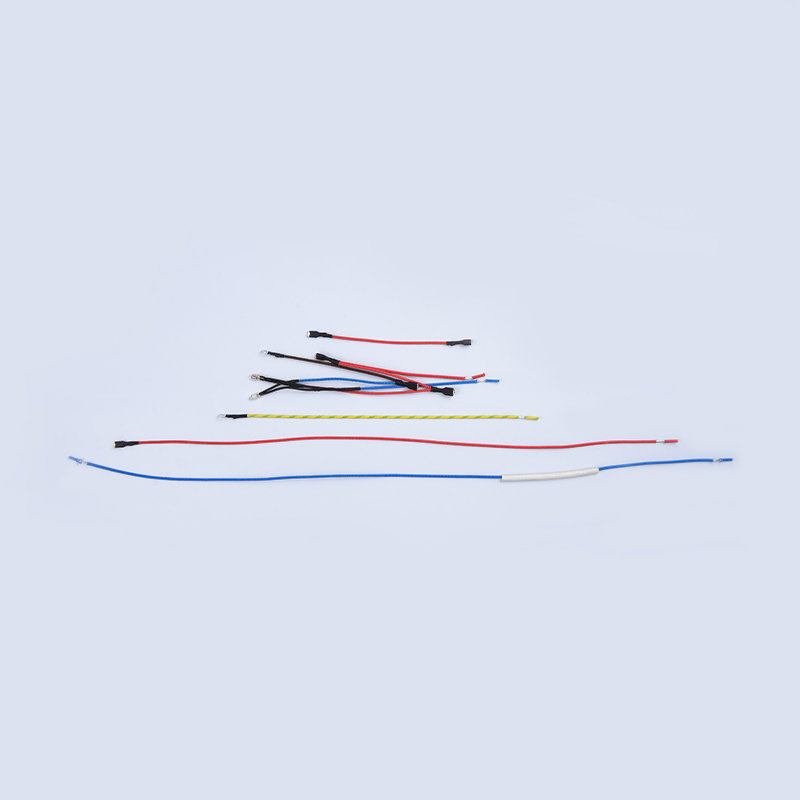
A wiring harness is an organized assembly of wires, cables, connectors, and protective coverings that transmits electrical power and signals between components in a system. In a single sentence: it replaces a loose tangle of individual wires with a structured, protected bundle that is faster to install, easier to diagnose, and far safer in service. Every modern vehicle, kitchen appliance, and environmental monitoring or control system depends on a wiring harness to function reliably.
The core functions of any wiring harness are consistent across industries: power distribution, signal transmission, physical protection of conductors, and system organization. What changes between an auto parts wiring harness, a kitchen appliance wiring harness, and an environmental electrical wiring harness is the operating environment, the wire gauge and insulation specification, the connector type, and the regulatory standards that govern design and manufacturing. The sections below explain each function and application category in practical detail.
What a Wiring Harness Does: Core Functions Explained
Understanding what a wiring harness does requires looking at each of its four primary functions in turn, because each one addresses a specific engineering problem that loose, individual wiring cannot solve efficiently.
Power Distribution
A wiring harness routes electrical current from the power source — a battery, mains supply, or generator — to every component that requires it, at the correct voltage and amperage. In a modern passenger vehicle, the main wiring harness carries power from a 12V battery through circuits rated from 5A (for sensors) to 200A+ (for the starter motor), all within a single integrated assembly. Without the harness, achieving this distribution would require hundreds of individually routed wires, each needing its own securing, labeling, and protection — multiplying installation time and fault risk dramatically.
Signal Transmission
Beyond power, modern wiring harnesses carry low-voltage data and control signals between sensors, controllers, and actuators. In automotive applications, CAN bus (Controller Area Network) data lines within the harness transmit signals at up to 1 Mbit/s, coordinating engine management, ABS, airbags, and infotainment simultaneously. Signal-carrying conductors within a harness are typically twisted in pairs or shielded with foil or braid to prevent electromagnetic interference (EMI) from corrupting the data — a design requirement that adds complexity but is non-negotiable in safety-critical systems.
Physical Protection of Conductors
Bare wires exposed to heat, moisture, vibration, or abrasion fail quickly. A wiring harness addresses this through multiple protective layers: insulation on each individual conductor, plus an outer jacket of braided sleeving, corrugated conduit, or heat-shrink tubing that protects the entire bundle. In automotive engine compartments, harness components must survive continuous operating temperatures of 125°C (257°F) and intermittent peaks to 150°C or beyond. In outdoor environmental monitoring systems, UV-resistant jacketing and IP67 or IP68-rated connectors prevent moisture ingress in rain, fog, and submersion conditions.
System Organization and Serviceability
A properly designed wiring harness organizes every conductor into a logical, documented structure. Each circuit is color-coded, labeled, and routed predictably — so a technician can diagnose a fault in minutes rather than hours. In manufacturing, a pre-assembled harness reduces vehicle assembly line wiring time from several hours of individual wire routing to under 30 minutes of harness clip-in and connector mating, a productivity gain that is a major driver of harness adoption in mass-production industries.
Auto Parts Wiring Harness: Complexity, Standards, and Subcategories
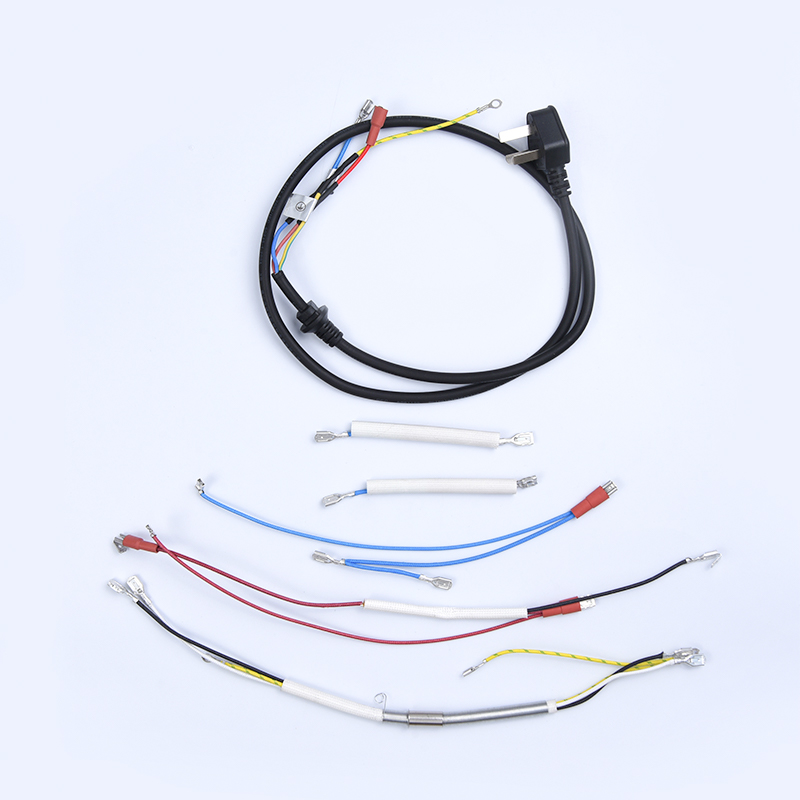
The auto parts wiring harness is the most complex wiring harness category in common production. A modern mid-size passenger vehicle contains 1,500–3,000 meters (roughly 1–2 miles) of wiring integrated into multiple interconnected harness assemblies, weighing a combined 20–40 kg (44–88 lbs). Electric vehicles increase this further, adding high-voltage harness systems operating at 400V or 800V DC alongside the conventional 12V low-voltage harness.
Major Automotive Harness Subcategories
- Engine wiring harness: connects the ECU (engine control unit) to sensors (oxygen sensors, coolant temperature, crankshaft position), fuel injectors, and ignition components; must withstand the harshest underhood thermal and vibration environment
- Body wiring harness: routes power and signals for lighting (headlights, taillights, interior lights), power windows, door locks, mirrors, and HVAC controls throughout the vehicle body
- Dashboard / instrument panel harness: connects the instrument cluster, infotainment system, climate controls, airbag modules, and steering column switches in the densest wiring zone of the vehicle
- Chassis / floor harness: runs longitudinally under the vehicle, connecting front and rear lighting, ABS wheel speed sensors, fuel pump, and trailer wiring connections
- High-voltage (HV) harness (EV/HEV): carries traction battery power to the electric motor and on-board charger; uses orange-jacketed, heavily shielded cable with specialized HV connectors rated to 600V–1,000V and 200A+
Key Standards Governing Automotive Wiring Harnesses
Automotive wiring harnesses are among the most tightly regulated electrical components in manufacturing. Core standards include:
- ISO 6722: specifies requirements for single-core cables used in road vehicles, including temperature ratings up to 125°C or 150°C
- USCAR-2: the US automotive connector performance standard, defining electrical, mechanical, and environmental connector requirements
- LV 112 / LV 214 (German OEM standards): additional requirements for wire and connector performance applied by BMW, Mercedes-Benz, and Volkswagen
- IEC 62196 / SAE J1772: standards for EV charging connectors integrated into high-voltage harness assemblies
Why Automotive Harness Quality Directly Affects Vehicle Safety
Wiring harness failures are a leading cause of vehicle electrical fires and electronic system faults. The US NHTSA (National Highway Traffic Safety Administration) has issued multiple recalls involving defective wiring harnesses — including a high-profile recall affecting over 1.4 million vehicles related to chafed wiring harnesses that caused engine compartment fires. This underscores why automotive harnesses require 100% electrical continuity and insulation resistance testing before shipment, with zero defect tolerance in safety-critical circuits.
Kitchen Appliance Wiring Harness: Safety, Heat, and Compact Design
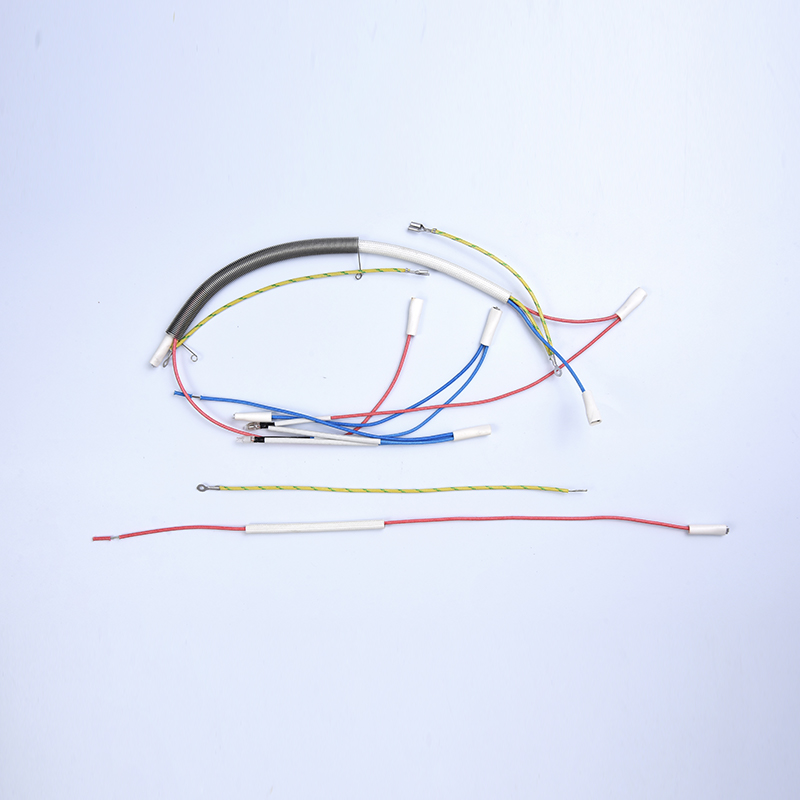
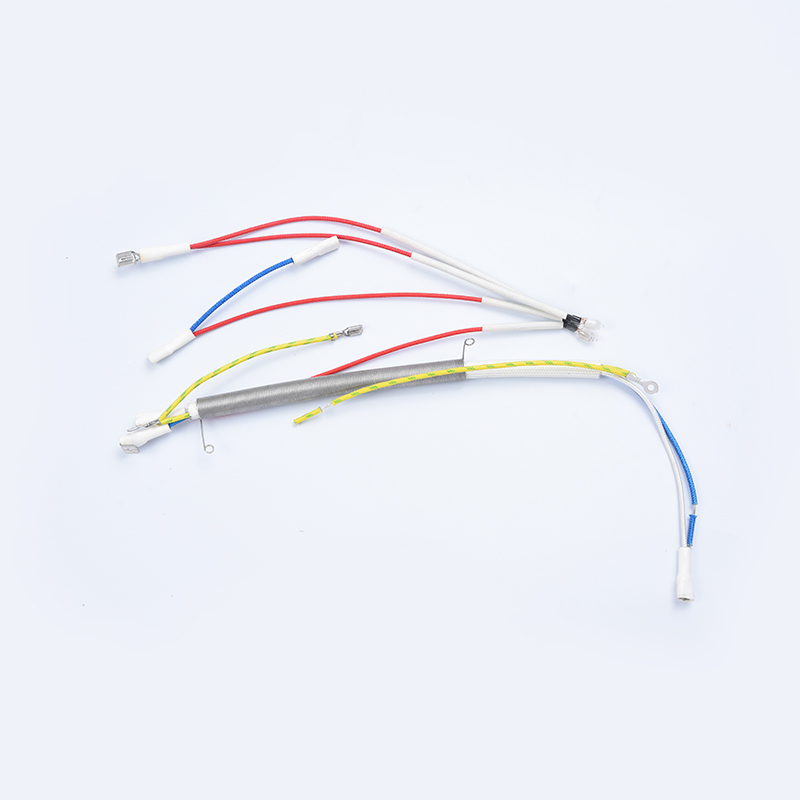
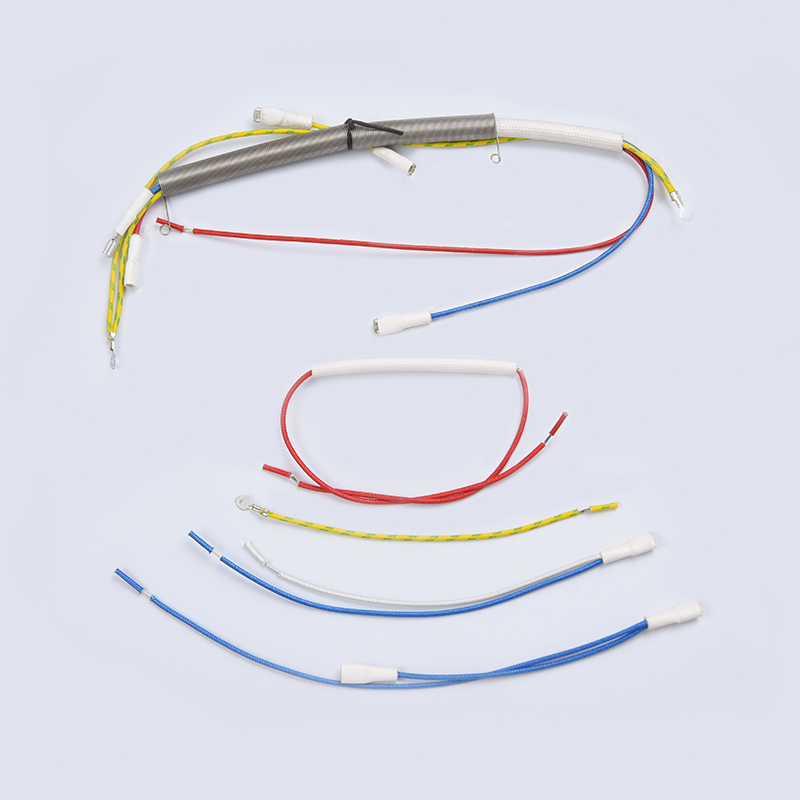
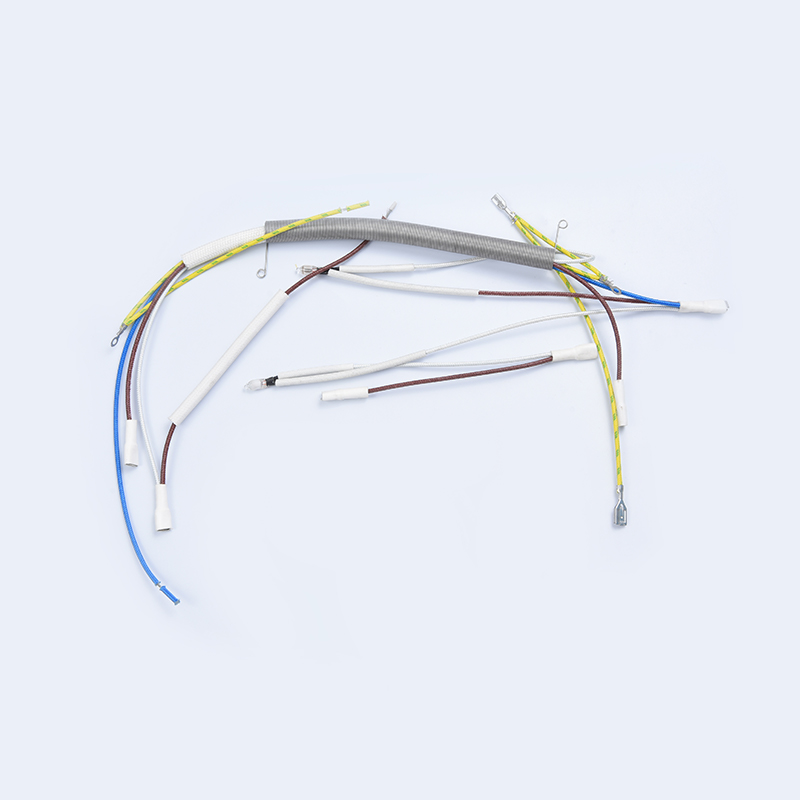
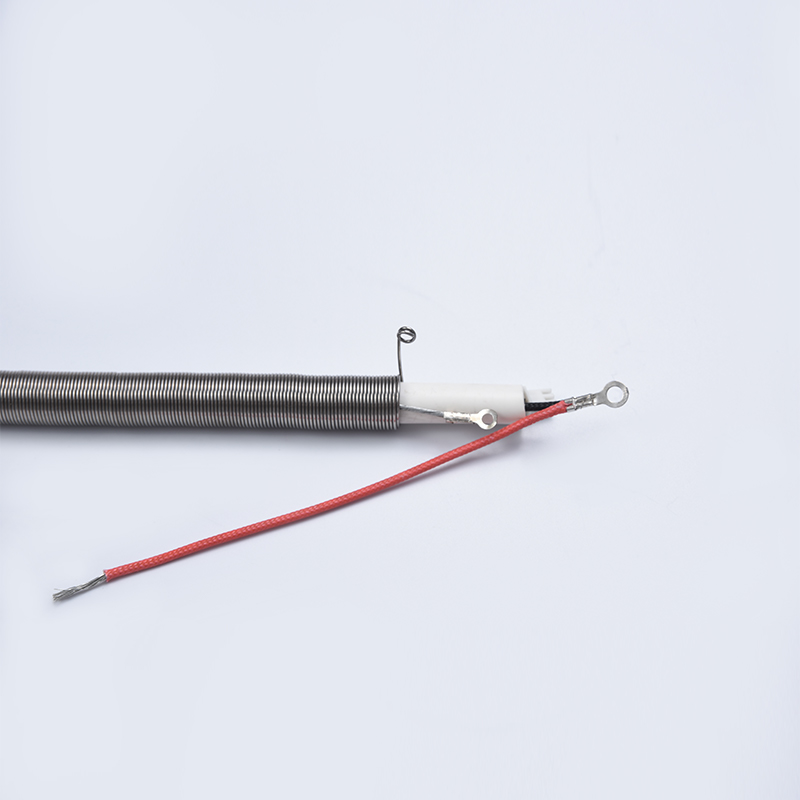
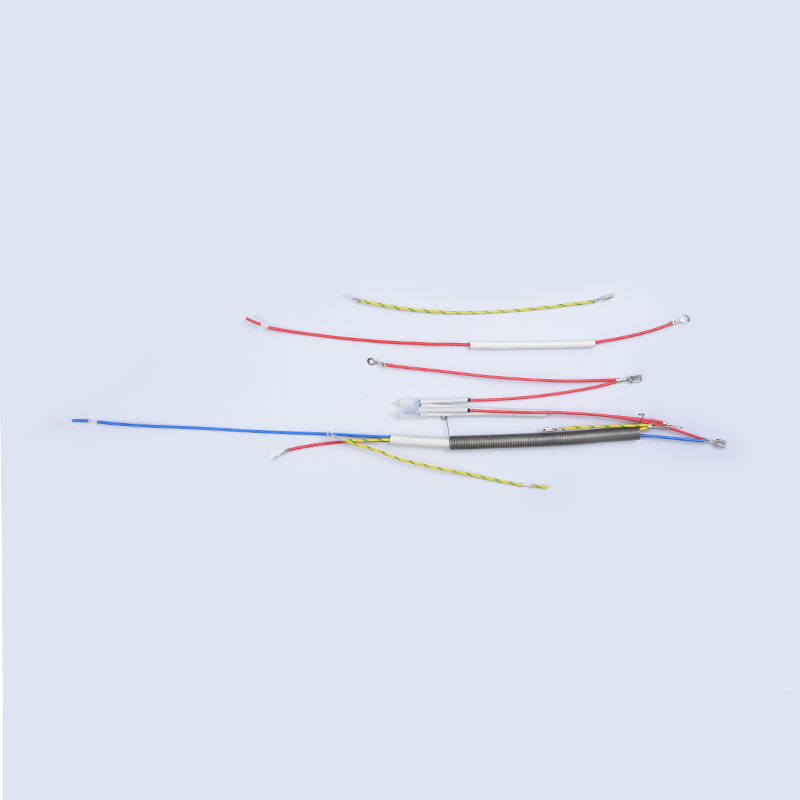
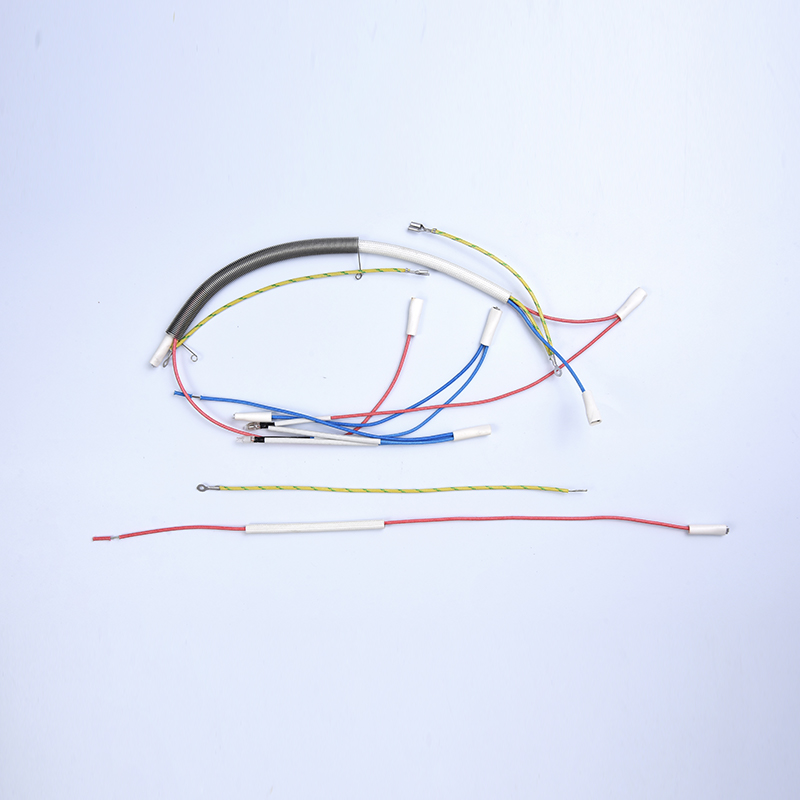
The kitchen appliance wiring harness operates in a very different environment from automotive harnesses — but the demands it faces are no less challenging. Kitchen appliances combine mains voltage (120V AC in North America; 220–240V AC in Europe and most other markets) with high ambient temperatures, humidity, food residue exposure, and the need for compact packaging inside tight appliance enclosures.
What Kitchen Appliance Harnesses Connect
Depending on the appliance, a kitchen wiring harness may interconnect:
- Ovens and ranges: heating elements (typically drawing 1,000–3,500W each), temperature sensors, control boards, door switches, convection fans, and self-cleaning lock motors — all within a heat-resistant harness rated to 150°C–200°C
- Refrigerators: compressor, evaporator fan, defrost heater, thermostat, door sensors, and LED lighting through a harness routed around refrigerated and ambient temperature zones simultaneously
- Dishwashers: wash pump motor, drain pump, heating element, water inlet valve, door latch sensor, and control board — all exposed to steam and water vapor; harness connectors must be moisture-resistant
- Microwaves: magnetron, high-voltage transformer, capacitor circuit, turntable motor, door interlock switches, and control panel — including circuits carrying 2,000–4,000V DC in the magnetron supply, which demands extra insulation and separation within the harness
Insulation and Material Requirements
Kitchen appliance harnesses typically use conductors insulated with silicone rubber, PTFE (Teflon), or cross-linked polyethylene (XLPE) — materials that maintain flexibility and insulation integrity at sustained high temperatures where standard PVC insulation would soften, crack, or off-gas. Silicone-insulated wire is the most common choice for harnesses routed near oven heating elements because it remains flexible at temperatures from -60°C to +200°C.
Safety Standards for Kitchen Appliance Wiring Harnesses
Kitchen appliance harnesses must comply with safety standards that protect end users from shock, fire, and overheating:
- UL 758 (US): standard for appliance wiring material, specifying temperature ratings, flame resistance, and conductor construction
- IEC 60335-1 (international): the primary safety standard for household electrical appliances, including requirements for internal wiring, creepage and clearance distances, and heat resistance
- VDE 0472 (Germany/EU): cable testing standard widely referenced by European appliance manufacturers
- RoHS Directive: restricts hazardous substances (lead, mercury, cadmium, certain flame retardants) in electrical equipment, affecting connector plating and insulation material selection
Design Challenges Unique to Kitchen Appliances
The primary harness design challenge in kitchen appliances is achieving adequate current-carrying capacity and insulation in an extremely compact space. A full-size oven harness must route conductors carrying up to 50A (for a 240V/12,000W oven) through a chassis often less than 40mm deep. This requires careful thermal modeling to ensure that bundled conductors in confined spaces do not exceed their rated temperature — a phenomenon called current derating, where a conductor's safe current capacity decreases as bundle density increases.
Environmental Electrical Wiring Harness: Outdoor Durability and Certification
An environmental electrical wiring harness is designed for use in systems exposed to outdoor or industrial environments: weather monitoring stations, solar power installations, water treatment plants, agricultural automation, EV charging infrastructure, and industrial control enclosures. The defining challenge is long-term reliability under sustained exposure to moisture, UV radiation, temperature cycling, chemical agents, and mechanical stress — often with minimal opportunity for service or inspection over a 10–25 year system life.
Key Environmental Stresses and How Harness Design Addresses Them
- Moisture and water ingress: connectors are rated to IP67 (dust-tight, submersion to 1m for 30 minutes) or IP68 (continuous submersion); cable jacket materials such as polyurethane (PUR) or thermoplastic elastomer (TPE) provide flexibility and water resistance simultaneously
- UV radiation: outdoor harness jacketing must incorporate UV stabilizers (carbon black or HALS — hindered amine light stabilizers) to prevent photodegradation; untreated PVC cable jacket loses flexibility and cracks after as little as 2–3 years of direct sun exposure
- Temperature extremes: environmental harnesses must function across wide temperature ranges, typically -40°C to +85°C, with some arctic-rated systems specified down to -55°C; silicone and cross-linked PE remain flexible at these extremes where standard insulations stiffen and crack
- Chemical exposure: in agricultural and industrial settings, harnesses may be exposed to fertilizers, hydraulic fluids, cleaning agents, or salt spray; PUR jacketing offers the best broad chemical resistance among common harness jacket materials
- Mechanical stress and vibration: outdoor harnesses on wind turbines, pumping stations, or mobile agricultural equipment experience continuous vibration; stranded conductors and flexible conduit systems absorb movement that would fatigue solid conductors or rigid conduit
Environmental Harness Applications and Examples
The range of environmental electrical wiring harness applications is broad. Some of the most common include:
- Solar photovoltaic (PV) systems: harnesses connect solar panels, inverters, and battery storage; PV-specific cables are rated to TÜV 2 Pfg 1169 / UL 4703 standards for 25+ year outdoor life and carry DC voltages up to 1,500V in utility-scale installations
- Wind turbine nacelle harnesses: route power and control signals within the turbine tower and nacelle, surviving continuous vibration from rotor operation and temperature swings from near-freezing nights to 60°C+ inside the nacelle on summer days
- Water and wastewater treatment plant wiring: harnesses connect pumps, sensors, and control panels in permanently humid, sometimes corrosive environments; all connectors and enclosures must meet IP65 minimum, with submerged components meeting IP68
- Agricultural automation: harnesses on irrigation controllers, soil sensors, and autonomous farm equipment must resist fertilizer, pesticide, and mud exposure through the growing season while functioning across the full temperature range of field conditions
- EV charging station infrastructure: outdoor charging stations use heavy-duty harnesses rated to carry 32A–500A depending on charge level, with connectors and cable assemblies certified to IEC 62196 and tested for 10,000+ mating cycles across the full outdoor temperature range
Comparing the Three Harness Types: Key Differences at a Glance
While all wiring harnesses share the same fundamental purpose, the engineering choices that define an auto parts wiring harness, a kitchen appliance wiring harness, and an environmental electrical wiring harness differ significantly. The table below summarizes the critical distinguishing factors.
| Parameter | Auto Parts Wiring Harness | Kitchen Appliance Wiring Harness | Environmental Electrical Wiring Harness |
|---|---|---|---|
| Operating Voltage | 12V DC (LV); 400–800V DC (EV HV) | 120V / 240V AC mains; up to 4,000V DC (microwave HV) | Variable; up to 1,500V DC (solar); 32A–500A (EV charging) |
| Temperature Range | -40°C to +150°C (engine bay) | -20°C to +200°C (near heating elements) | -55°C to +85°C (outdoor/industrial) |
| Primary Insulation Material | Cross-linked PVC, XLPE, silicone | Silicone, PTFE, XLPE | Polyurethane (PUR), TPE, XLPE, silicone |
| Connector IP Rating | IP54–IP69K (underbody/engine) | IP20–IP44 (internal; no full immersion) | IP65–IP68 (full outdoor/submersion) |
| Key Standards | ISO 6722, USCAR-2, LV 112 | UL 758, IEC 60335-1, RoHS | IEC 62196, TÜV 2 Pfg 1169, UL 4703 |
| Typical Service Life | 10–15 years (vehicle life) | 8–15 years (appliance life) | 15–25 years (infrastructure life) |
| Primary Protective Covering | Corrugated conduit, tape wrap, PVC sleeving | Fiberglass sleeving, silicone tubing, spiral wrap | PUR/TPE outer jacket, armored conduit, UV-stabilized PE |
Wiring Harness Manufacturing: How Quality Is Built In
Understanding how wiring harnesses are manufactured helps explain why quality differences between suppliers matter — and why a low-cost harness from an unverified source can create expensive field failures.
The Assembly Process
- Wire cutting and stripping: automated cutting machines cut individual conductors to precise lengths (±1 mm tolerance in automotive production) and strip insulation at both ends to the exact depth required for the terminal crimp
- Terminal crimping: terminals are crimped onto conductor ends by automated or semi-automated crimping presses; crimp quality is validated by pull-force testing (each automotive crimp must withstand a minimum pull force, typically 40–80 N depending on wire gauge) and cross-section inspection
- Connector assembly: terminals are inserted into connector housings; connector locks or secondary lock assurance (SLA) features confirm full terminal seating
- Harness layout and binding: wires are laid out on a routing board (formboard) matching the final harness geometry, then bundled with tape, cable ties, corrugated conduit, or sleeving as specified
- Electrical testing: completed harnesses undergo 100% continuity testing (confirming every circuit is complete) and insulation resistance testing (confirming no shorts between circuits), typically using automated test benches that complete testing in under 60 seconds per harness
- Final inspection and packaging: visual inspection for mechanical damage, labeling verification, and protective packaging for shipment
Critical Quality Indicators When Sourcing Wiring Harnesses
When evaluating wiring harness suppliers — whether for automotive, kitchen appliance, or environmental applications — the following quality indicators separate reliable manufacturers from low-quality alternatives:
- 100% electrical testing: every harness, not a sample; automated test benches are standard in quality manufacturers
- Certified conductor and insulation materials: ask for material data sheets confirming temperature rating, flame resistance class (e.g., UL 94 V-0), and RoHS compliance
- Crimp quality validation: pull-force test records and cross-section sample inspection records should be available for review
- IATF 16949 certification (for automotive harnesses): the automotive quality management standard that requires documented process control, traceability, and continuous improvement
- Connector brand and sourcing: connectors from recognized manufacturers (Molex, TE Connectivity, Amphenol, Yazaki) with documented performance certifications provide far greater reliability assurance than unbranded alternatives
When a Wiring Harness Fails: Signs, Causes, and Diagnosis
Wiring harness failures manifest differently depending on the application, but the root causes fall into a consistent set of categories. Recognizing early signs prevents costly system failures.
Common Failure Modes
- Chafing and insulation wear: harnesses routed against sharp edges, clamps, or moving components develop worn insulation; the resulting short circuit can cause blown fuses, erratic component behavior, or fire in severe cases
- Connector corrosion: moisture ingress into unrated or damaged connectors causes oxidation of terminal surfaces, increasing contact resistance; symptoms include intermittent component operation and voltage drop-related errors
- Thermal degradation: prolonged exposure to temperatures above the insulation rating causes the insulation to harden, crack, and eventually fail; common near oven heating elements and automotive exhaust components
- Rodent damage: rodents chew wiring insulation for nesting material; a significant cause of electrical faults in parked vehicles and agricultural equipment, particularly in areas with soy-based wire insulation (used in some Japanese and Korean vehicles from 2012 onward)
- Poor crimp or connector joint: manufacturing defects in terminal crimps create high-resistance joints that cause voltage drop, localized heating, and eventually open-circuit failure — often intermittent before becoming permanent
Diagnostic Approach
Effective harness fault diagnosis follows a structured sequence:
- Visual inspection: check for obvious damage — chafing, cracked insulation, corroded or backed-out connector terminals, burn marks
- Continuity test: use a multimeter to confirm each conductor passes current end-to-end; an open reading indicates a broken wire or poor crimp
- Voltage drop test: measure voltage at both ends of a loaded circuit; a drop exceeding 0.5V on a 12V circuit indicates excessive resistance at a connection or in the conductor itself
- Insulation resistance test: using a megohmmeter, apply 500V DC between conductors or between conductors and the shield/ground; a reading below 1 MΩ indicates compromised insulation
- Thermal imaging: for harnesses under load, an infrared camera can reveal hot spots at high-resistance joints invisible to visual inspection — particularly valuable for kitchen appliance and industrial harnesses where access is limited