+86-0574-63316601


 中文简体
中文简体Content
- 1 What a Wiring Harness Actually Does: Core Functions
- 2 Anatomy of a Kitchen Appliance Wiring Harness
- 3 Wiring Harness Applications Across Common Kitchen Appliances
- 4 Safety Standards That Govern Kitchen Appliance Wiring Harnesses
- 5 How Kitchen Appliance Wiring Harnesses Are Designed and Manufactured
- 6 Common Wiring Harness Failure Modes in Kitchen Appliances
- 7 Replacing a Kitchen Appliance Wiring Harness: What to Know
- 8 Trends in Kitchen Appliance Wiring Harness Technology
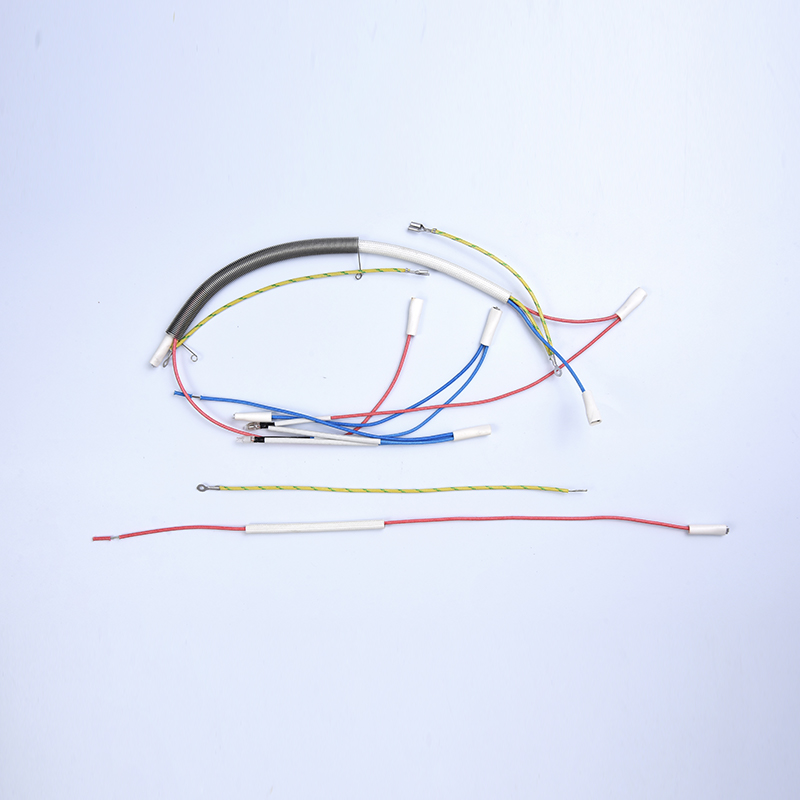
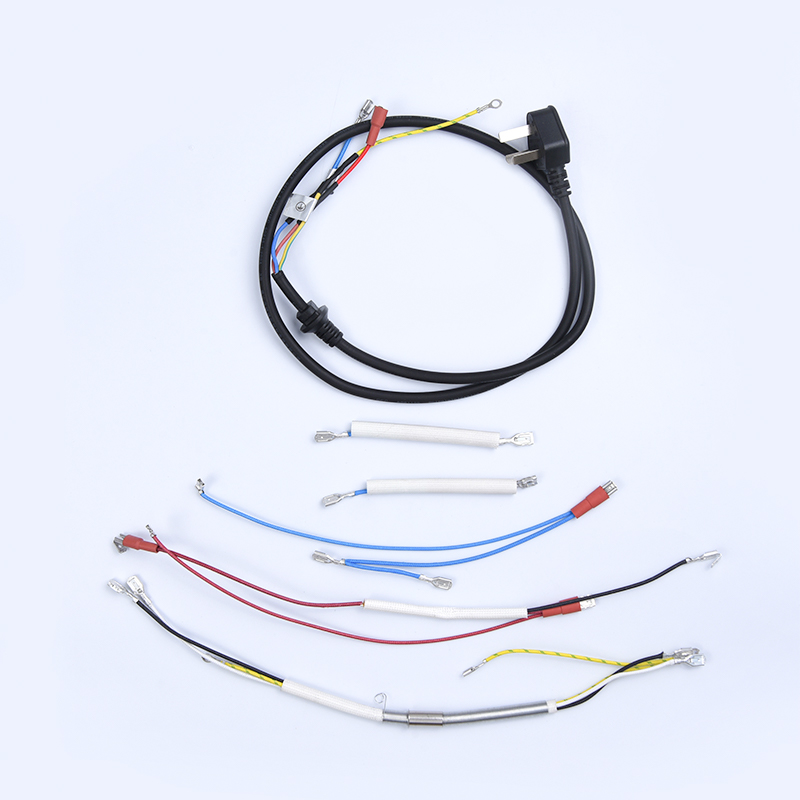
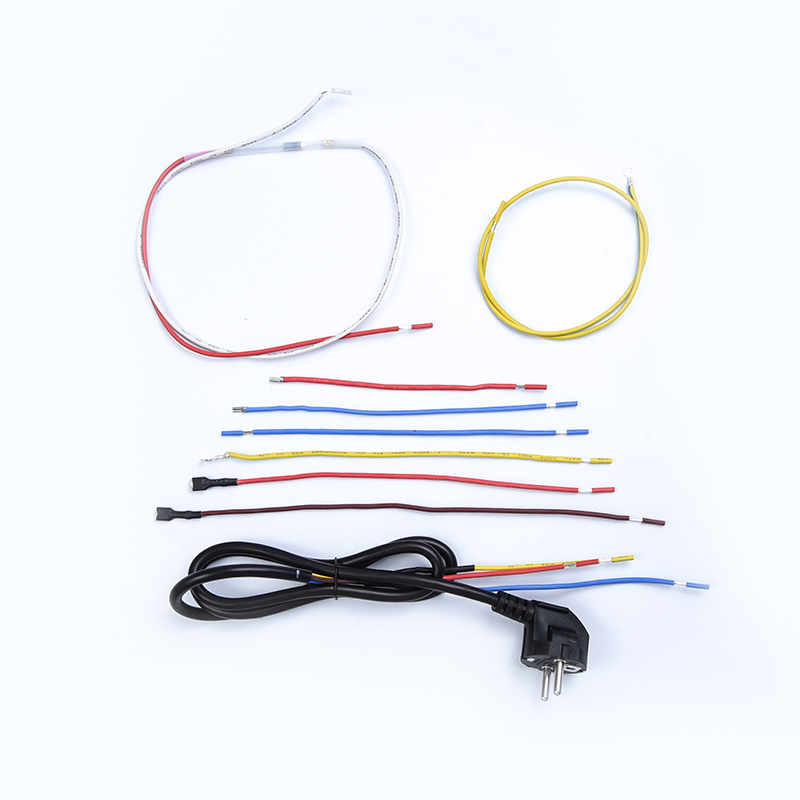
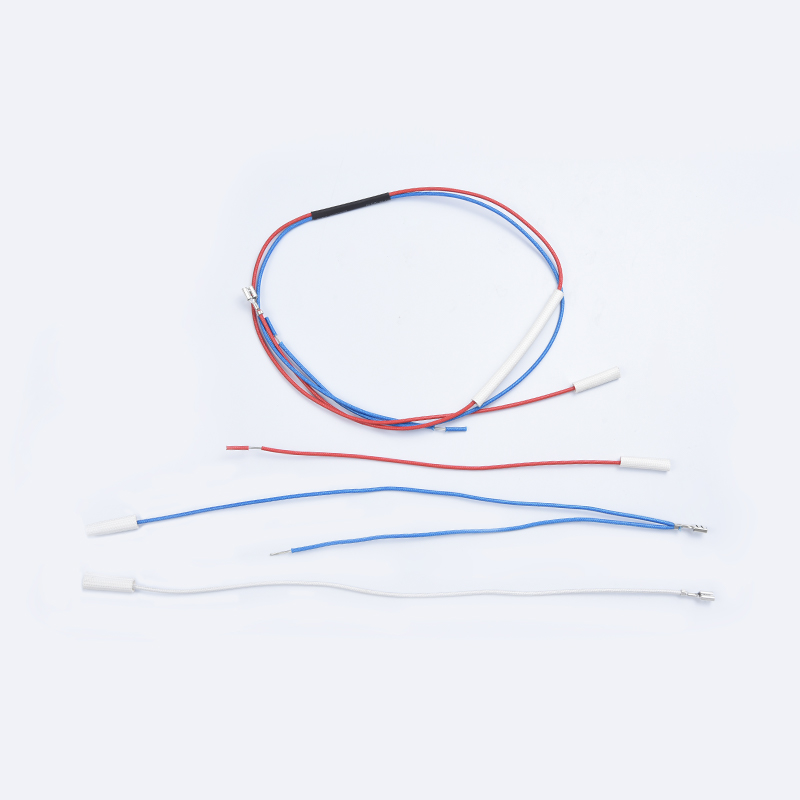
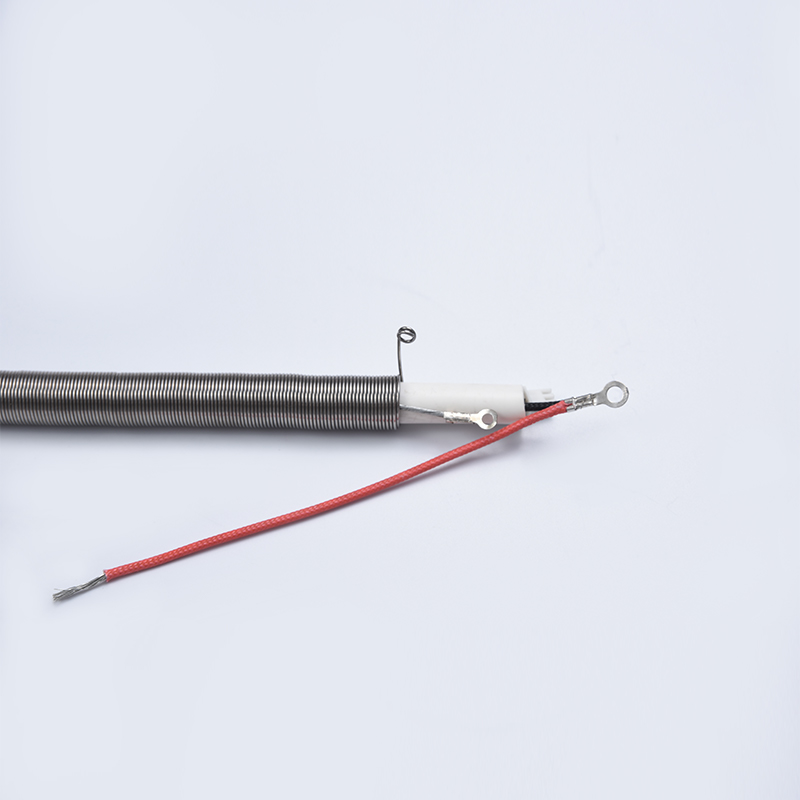
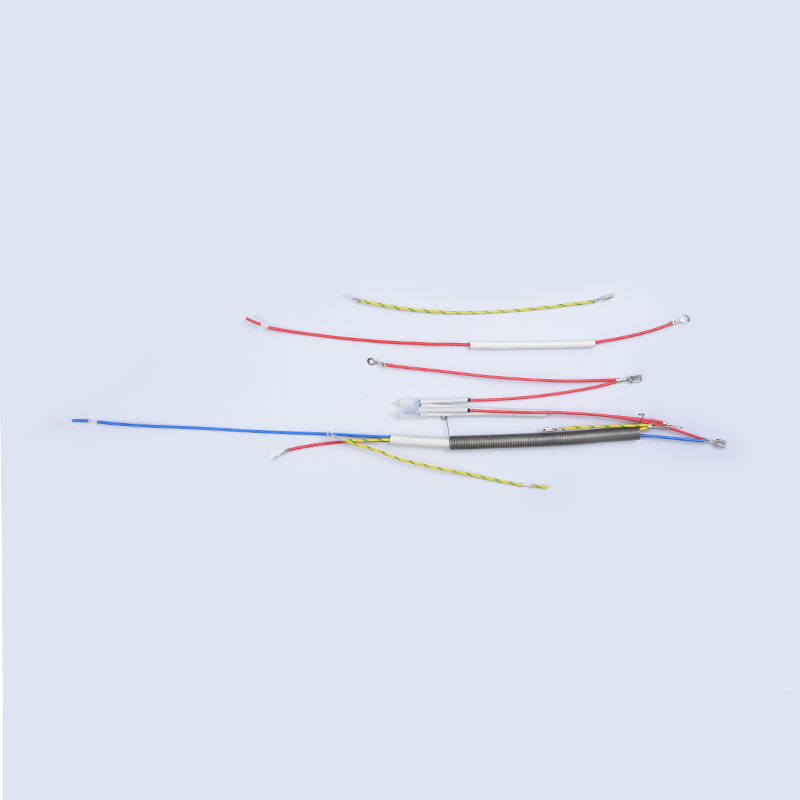
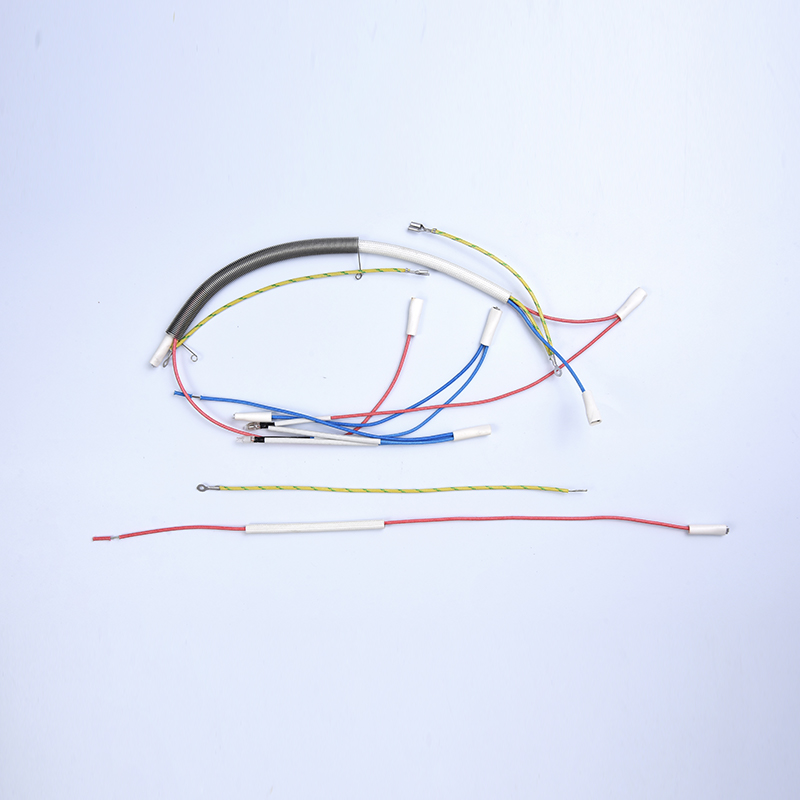
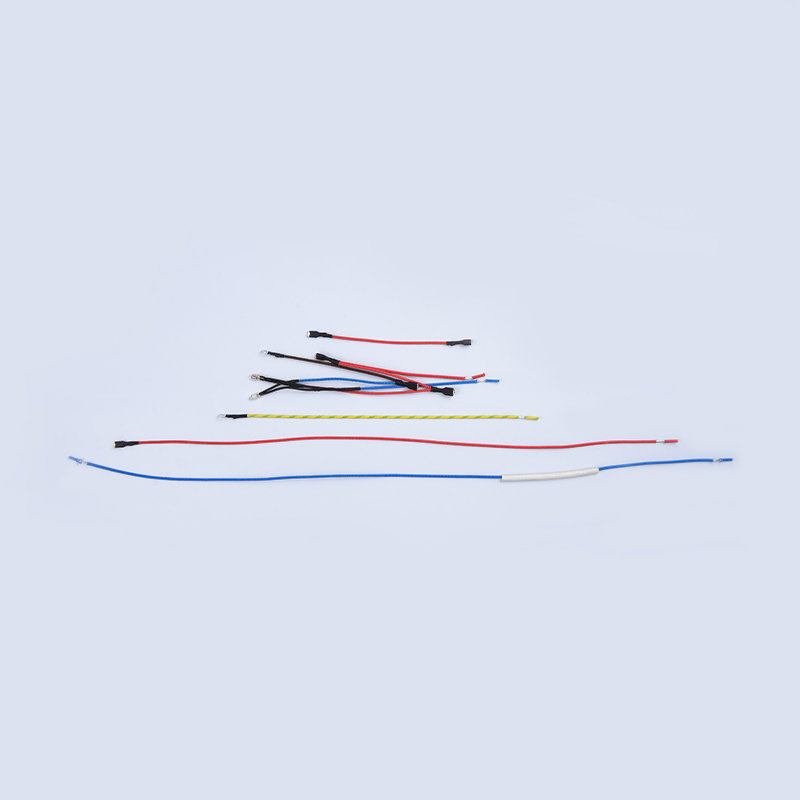
A wiring harness organizes and protects multiple electrical wires into a single, bundled assembly that routes power and signals reliably between components. In kitchen appliances specifically, a wiring harness connects the power supply, control board, heating elements, motors, sensors, and displays — ensuring every component receives the correct voltage and signal without interference, short circuits, or loose connections.
Without a wiring harness, the internal wiring of even a mid-range kitchen appliance would be a tangle of individual wires — difficult to assemble, harder to troubleshoot, and significantly more prone to failure. The harness is not an accessory; it is a core structural and functional element of any modern appliance.
What a Wiring Harness Actually Does: Core Functions
A wiring harness performs several distinct roles simultaneously. Understanding each one explains why manufacturers invest in purpose-designed harness assemblies rather than loose wiring.
Power Distribution
The harness carries electrical current from the main power input to every component that needs it. In a kitchen stand mixer, for example, the harness routes 120V AC from the power cord to the motor, while simultaneously feeding lower-voltage lines to the speed control board and any LED indicators. Each wire within the harness is sized precisely for the current it carries — using too thin a wire causes heat buildup and potential fire; too thick adds unnecessary cost and weight.
Signal Transmission
Beyond power, wiring harnesses carry low-voltage control signals between sensors and control boards. In a modern oven, temperature sensors (thermistors or thermocouples) send resistance or millivolt signals back to the control module through dedicated signal wires in the harness. If these signal wires are routed improperly or bundled too closely with high-current power wires, electromagnetic interference can cause erratic temperature readings or false error codes.
Physical Protection of Wires
Individual wires bundled into a harness are wrapped in protective materials — braided sleeves, corrugated conduit, heat-shrink tubing, or PVC loom — that shield them from abrasion, heat, moisture, and mechanical stress. In kitchen environments, this protection is critical. A wire routed near a heating element in a toaster oven without adequate thermal shielding will degrade rapidly; a properly specified harness uses high-temperature insulation rated to 105°C, 125°C, or higher depending on proximity to heat sources.
Organized Routing and Strain Relief
A harness defines a fixed path for every wire, preventing movement during operation. This is especially important in appliances with moving parts — blenders, food processors, washing machines — where vibration and mechanical motion could otherwise cause wires to fatigue and break at connection points. Strain relief features (molded boots, clamps, tie-down points) built into the harness design prevent tensile forces from reaching the solder joints or crimp terminals.
Simplified Assembly and Serviceability
From a manufacturing perspective, a wiring harness converts dozens of individual wiring steps into a single plug-in operation. A technician installing a harness in a dishwasher control panel takes seconds rather than minutes. In the field, a faulty harness can be replaced as one unit, rather than tracing and splicing individual wires — reducing repair time by 60–80% compared to point-to-point wiring repairs.
Anatomy of a Kitchen Appliance Wiring Harness
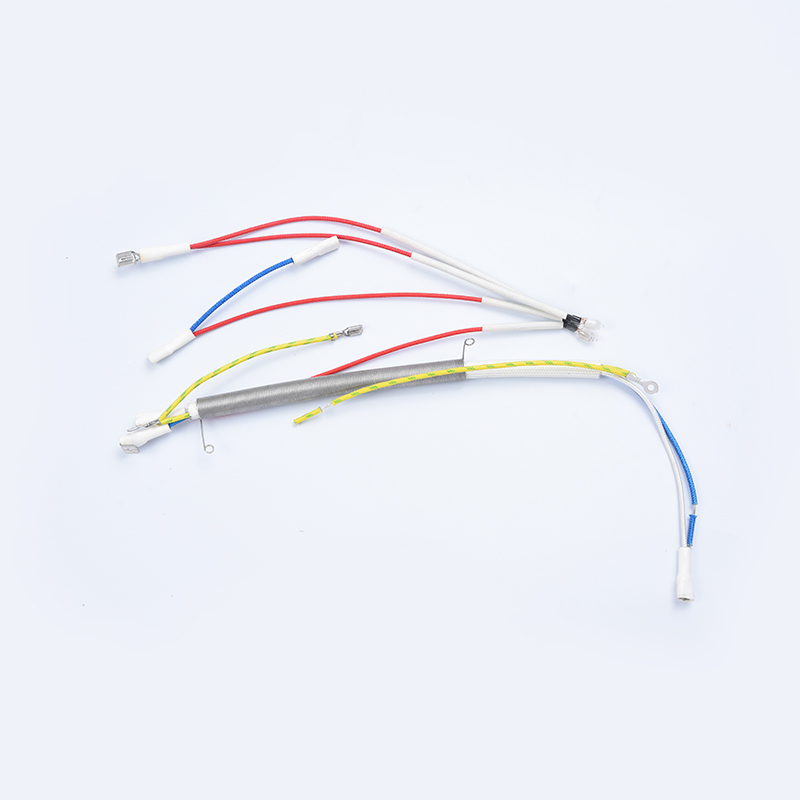
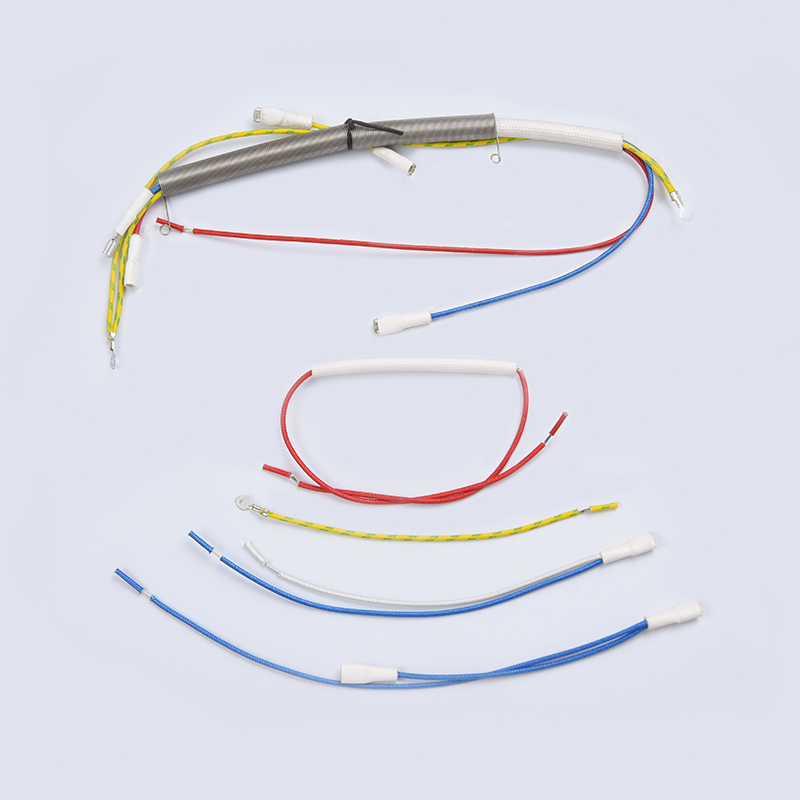
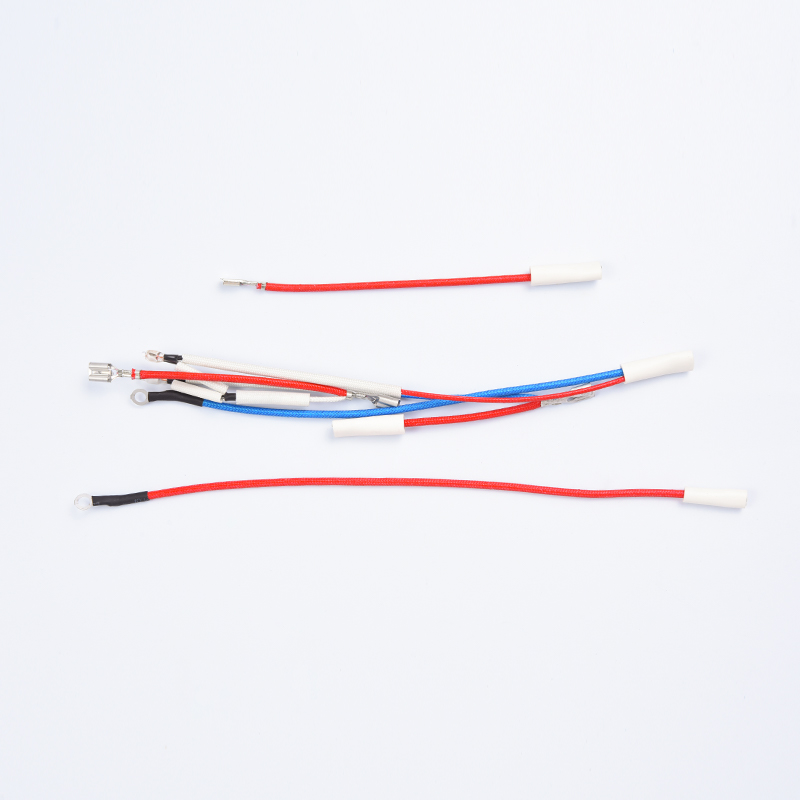
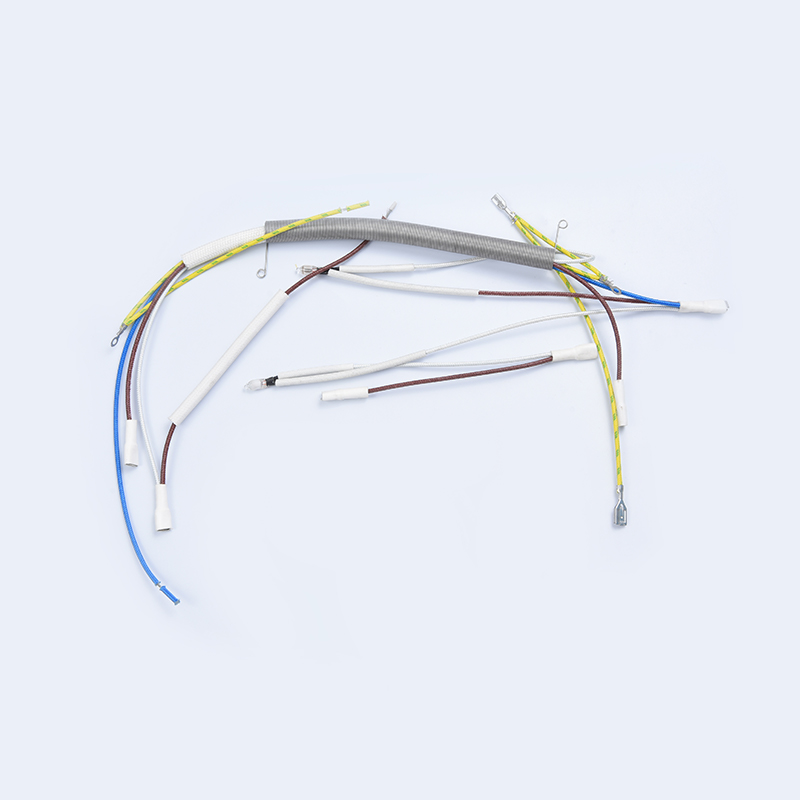
A kitchen appliance wiring harness is more than just a bundle of wires. Each component serves a specific engineering purpose:
- Conductors: Copper stranded wire is used in most kitchen appliances for flexibility and conductivity. Wire gauges typically range from 18 AWG (small signal wires) to 12 AWG (high-current heating circuits). Tinned copper conductors are used in humid environments like dishwashers to resist corrosion.
- Insulation: PVC is the most common insulation for general-purpose wiring. XLPE (cross-linked polyethylene) or silicone insulation is used for wires near high heat zones, offering thermal ratings up to 200°C.
- Connectors and terminals: Crimp terminals attach wires to connectors. Common connector types in kitchen appliances include Molex, JST, Faston (spade), and bullet connectors. Connector housings are keyed to prevent incorrect assembly — a critical safety feature.
- Protective sleeving: Corrugated split loom, braided nylon, or heat-resistant fiberglass sleeving protects the bundle from abrasion and radiant heat. In oven wiring harnesses, fiberglass sleeving rated to 300°C or higher is standard near broiler elements.
- Tape and binding: PVC tape, self-amalgamating tape, or cable ties hold the bundle together at regular intervals, maintaining the harness shape during handling and installation.
- Strain relief and mounting hardware: Grommets protect wires passing through metal panels; P-clips and adhesive mounts anchor the harness to the appliance chassis at defined points.
Wiring Harness Applications Across Common Kitchen Appliances
The complexity and specification of a kitchen appliance wiring harness varies significantly depending on the appliance type, power requirements, and operating environment. The table below summarizes typical harness characteristics across common kitchen appliances:
| Appliance | Typical Voltage | Key Harness Connections | Key Harness Challenge |
|---|---|---|---|
| Electric Oven / Range | 240V AC | Control board, heating elements, temperature sensors, door lock | Sustained high heat near bake/broil elements |
| Microwave Oven | 120V AC / high-voltage secondary | Magnetron, turntable motor, control board, door interlock switches | High-voltage isolation (up to 4,000V on magnetron circuit) |
| Dishwasher | 120V AC | Wash motor, drain pump, heating element, water inlet valve, control board | Moisture and steam resistance; tinned conductors required |
| Refrigerator | 120V AC | Compressor, defrost heater, fans, ice maker, display board | Wide temperature range from freezer to ambient; flexible harness routing |
| Stand Mixer | 120V AC | Motor, speed control board, governor, power switch | Vibration and motor heat; strain relief at motor connections |
| Coffee Maker | 120V AC | Heating element, pump, control board, thermostat | Compact routing in small chassis; moisture from steam venting |
Safety Standards That Govern Kitchen Appliance Wiring Harnesses
Kitchen appliance wiring harnesses must comply with multiple safety standards, depending on the market and appliance type. These standards define minimum requirements for insulation, current capacity, flame resistance, and connector integrity.
- UL 508 (USA): Covers industrial control equipment wiring, including appliance control boards and their harness connections. Wires must pass flammability ratings such as UL 94 V-0 for insulation materials.
- UL 60335 (USA/Canada): The primary safety standard for household appliances. Specifies requirements for insulation thickness, clearance distances between live parts, and temperature ratings at wire termination points.
- IEC 60335 (International): The international equivalent of UL 60335, adopted across the EU, Asia-Pacific, and most global markets. Sets binding requirements for wiring harness insulation class, creepage distances, and mechanical stress tests.
- RoHS Directive (EU): Restricts hazardous substances including lead, cadmium, and certain flame retardants in wire insulation and connector materials used in appliances sold in the European Union.
- VDE Standards (Germany/EU): German certification for electrical safety, widely respected globally. VDE-certified harness components confirm compliance with IEC standards and are a common procurement requirement for European appliance brands.
Non-compliant harnesses are one of the leading causes of appliance recall. Between 2018 and 2023, the CPSC (Consumer Product Safety Commission) issued multiple appliance recalls linked to wiring harness defects — including overheating insulation, loose crimp terminals causing arcing, and inadequate strain relief leading to conductor fatigue failures.
How Kitchen Appliance Wiring Harnesses Are Designed and Manufactured
Designing a kitchen appliance wiring harness is a disciplined engineering process, not a simple bundling task. The workflow typically follows these stages:
- Schematic development: Electrical engineers define every circuit in the appliance — current loads, signal types, connector interfaces — and produce a wiring schematic that the harness must implement.
- Wire specification: Each wire is specified by gauge (AWG or mm²), insulation material, temperature rating, and color coding. Color coding follows conventions (e.g., black for line, white for neutral, green for ground in North American appliances) to enable safe servicing.
- Routing design: Engineers determine the physical path each wire bundle will take through the appliance chassis, accounting for heat zones, moving parts, sharp edges, and serviceability access points.
- Prototype and testing: Sample harnesses are built and subjected to dielectric strength tests, pull-force tests on crimped terminals, bend cycle tests, and thermal cycling to validate performance under operating conditions.
- Production on form boards: In volume manufacturing, harnesses are assembled on form boards — flat boards with pegs that map out the harness geometry. Workers route wires along pegs, crimp terminals, add connectors, apply sleeving, and bind the assembly in a consistent, repeatable process.
- Electrical testing: Completed harnesses are 100% tested using continuity testers or automated harness test systems that verify every circuit, detect shorts, and confirm correct connector assembly before the harness ships.
Common Wiring Harness Failure Modes in Kitchen Appliances
Understanding how wiring harnesses fail helps both manufacturers design better products and consumers recognize early warning signs before a minor fault becomes a safety hazard.
Insulation Degradation from Heat
Wires routed too close to heating elements experience gradual insulation breakdown. The insulation becomes brittle, cracks, and eventually exposes bare conductor — creating a short circuit or fire risk. This is particularly common in toaster ovens and ranges where harness routing tolerances are tight. Burnt or discolored insulation near heating zones is the most visible symptom.
Loose or Corroded Crimp Terminals
Crimp terminals that are under-crimped, over-crimped, or exposed to moisture develop high resistance at the connection point. This resistance generates heat — sometimes enough to melt the connector housing or ignite nearby materials. In dishwashers, steam and water vapor accelerate terminal corrosion, making moisture-sealed connectors a best practice rather than an optional upgrade.
Conductor Fatigue from Vibration
In appliances with motors — stand mixers, food processors, blenders — wires anchored at both ends but not properly strain-relieved flex repeatedly with each vibration cycle. Over thousands of operating hours, the conductor strands break progressively until the wire fails completely. Intermittent faults that appear during operation but not at rest are a classic symptom of vibration fatigue.
Rodent or Pest Damage
Appliances stored in areas accessible to rodents are vulnerable to wire chewing. Rodents are attracted to the warmth of appliances and will gnaw through insulation and conductors, causing shorts or open circuits. Damaged harnesses from pest activity should be replaced entirely, not spliced, as the extent of damage is often greater than what is visually apparent.
Replacing a Kitchen Appliance Wiring Harness: What to Know
When a wiring harness fails, replacement is almost always preferable to repair for safety-critical kitchen appliances. Here are the key considerations:
- Use OEM (original equipment manufacturer) harnesses: Aftermarket harnesses may not match the original wire gauge, connector keying, or insulation ratings. For appliances rated at 240V or those with heating elements, OEM replacement is strongly recommended.
- Identify the harness by model number: Wiring harnesses are appliance-model-specific. Even two models from the same brand that look identical externally may use different harnesses. Always use the full model number, not just the product name.
- Disconnect power before any work: For 240V appliances (ranges, dryers), turn off the circuit breaker and verify with a multimeter that voltage is absent before touching any wiring.
- Photograph the original routing before removal: A clear photo of how the original harness was routed and connected saves significant time during reinstallation and prevents incorrect routing that could cause new failures.
- Never splice high-current wires: Splicing heating element circuits or motor supply wires introduces connection resistance and creates fire risks. Full harness replacement is the correct approach.
Trends in Kitchen Appliance Wiring Harness Technology
The wiring harness in modern kitchen appliances is evolving alongside broader trends in appliance technology and manufacturing.
Smart Appliance Integration
Connected kitchen appliances — ovens with Wi-Fi, refrigerators with touchscreens, dishwashers with app control — require harnesses that carry both power and data signals. This means integrating USB, CAN bus, or proprietary serial communication wires alongside traditional power circuits, demanding tighter electromagnetic compatibility (EMC) management within the harness design.
Miniaturization and Weight Reduction
Consumer demand for compact, lightweight appliances is pushing harness designers toward thinner conductors, smaller connector profiles, and higher-density connector housings. Advances in insulation materials allow thinner walls without sacrificing dielectric performance, enabling wire bundle diameters to shrink by 20–30% compared to designs from a decade ago.
Automation in Harness Manufacturing
While harness assembly remains largely manual for complex geometries, automated wire cutting, stripping, and crimping machines now handle a significant portion of the production process. Fully automated harness assembly lines are emerging for high-volume, standardized harness designs, improving crimp consistency and reducing defect rates to below 50 parts per million (PPM) in leading facilities.