+86-0574-63316601


 中文简体
中文简体Content
- 1 What a Food Processor NTC Temperature Sensor Does
- 2 Key Specifications to Check Before You Buy
- 3 Probe Construction and Mounting Matter
- 4 What Can Go Wrong in Real Use
- 5 What to Ask a Supplier Before Placing an Order
- 6 Why Sensor Selection Does Not End with the Component
- 7 A Practical Sourcing Approach
- 8 Bottom Line
When a food processor stalls under a heavy load, the first part most engineers blame is the motor. In many cases the real cause is a temperature sensor that responds too slowly, has the wrong resistance curve, or fails after repeated heat cycles. The food processor NTC temperature sensor is a small component, but it decides whether the motor shuts down at a safe winding temperature or keeps running until the insulation degrades. Choosing the right one means matching more than a resistance value. You also need the right chip, probe construction, lead wire, mounting method, and a supplier that can keep those parameters consistent across batches.
What a Food Processor NTC Temperature Sensor Does
An NTC thermistor is a temperature-dependent resistor made from ceramic and metal oxide composites. It has a negative temperature coefficient, which simply means its resistance drops as temperature rises. In a food processor, the sensor is usually placed near the motor winding, on the motor housing, or in a heated bowl/pitcher assembly. It sends a changing resistance signal to the control board, which then regulates power or cuts off the motor when the temperature reaches a set limit.
The two values that define the sensor are R25, the resistance at 25°C, and the B value, which describes how steeply the resistance changes with temperature. Common examples are 10kΩ with a 3435K B value and 100kΩ with a 3950K B value. These two parameters must fit the circuit on the control board. If the B value is too low or too high, the controller reads the wrong temperature and can trip late. For a component designed around the mechanical and electrical conditions of a food processor, a dedicated food processor NTC temperature sensor is more reliable than a generic leaded thermistor placed loosely near the motor.
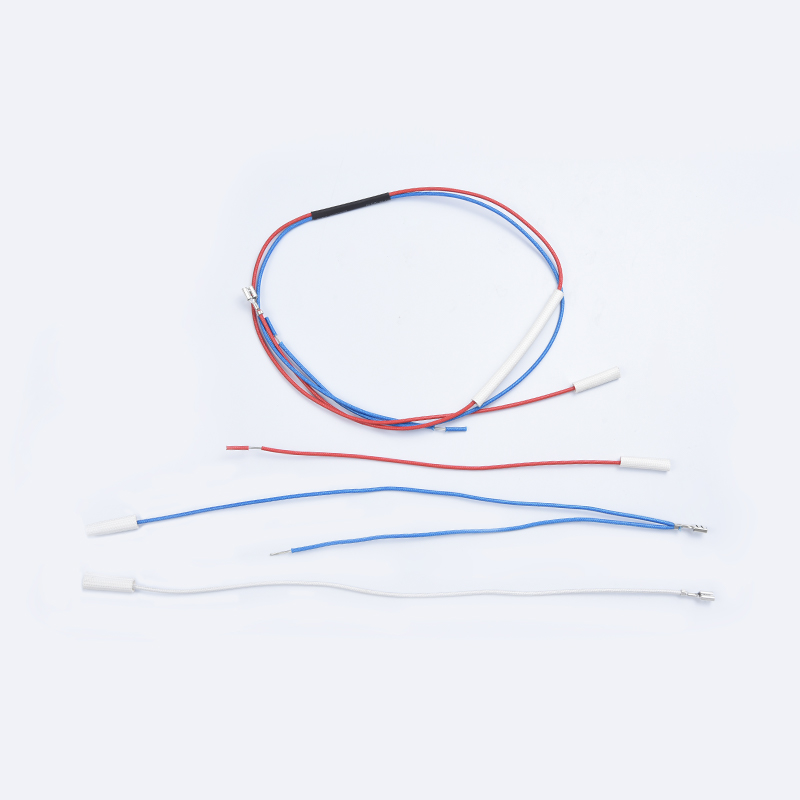
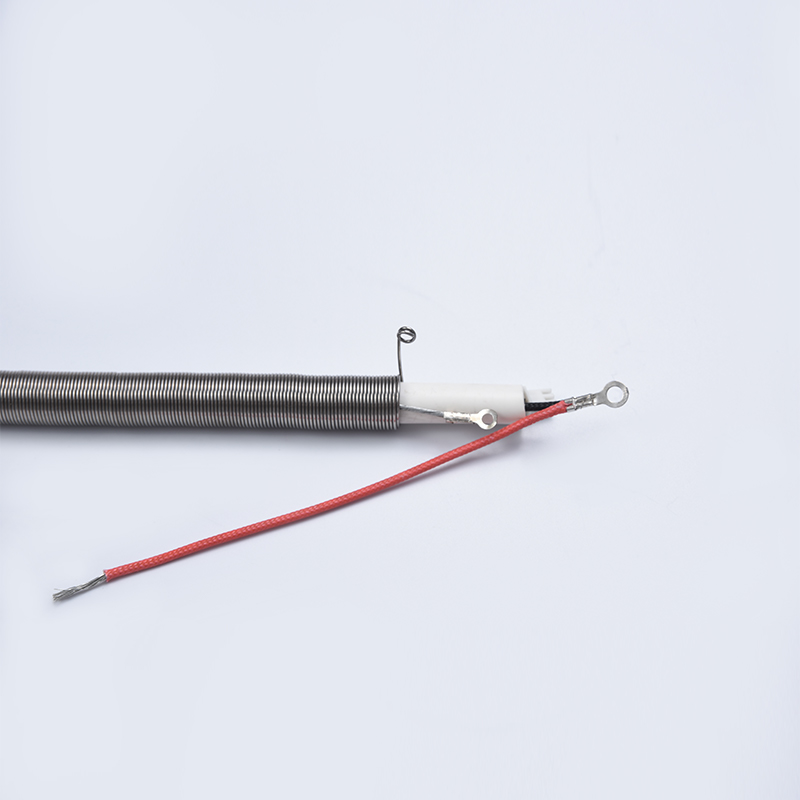
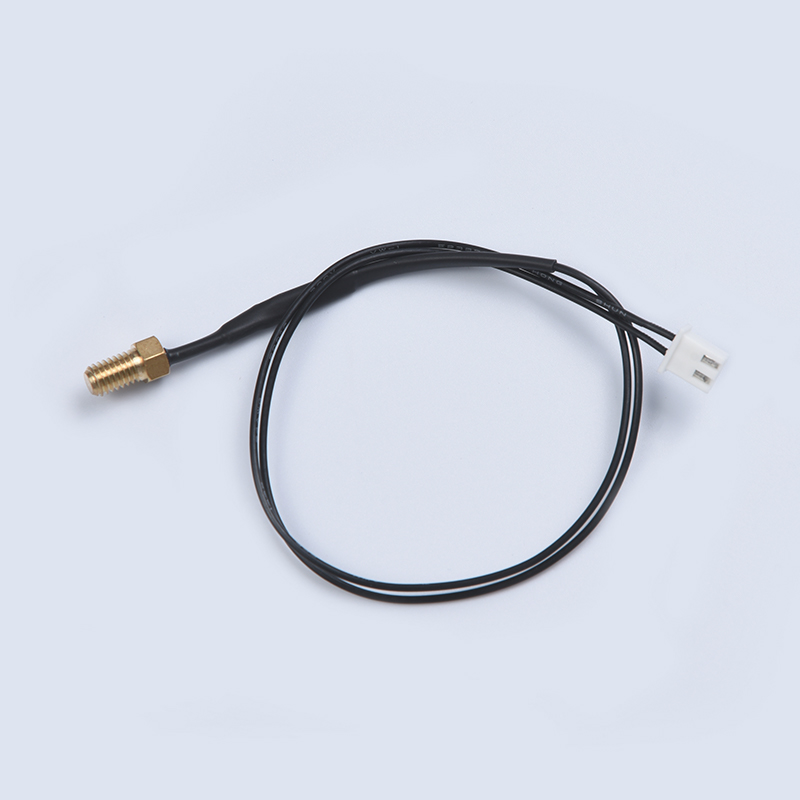 Custom Food Processor NTC Temperature Sensor Manufacturers, SuppliersCixi Tengyu Electric Appliance Co., Ltd. is China Food Processor NTC Temperature Sensor manufacturers and Food Processor NTC Temperature ...View Product →
Key Specifications to Check Before You Buy
A few numbers in a datasheet tell you most of what you need to know. Check them against your controller input, your maximum operating temperature, and the space available in the appliance.
| Parameter | Typical Range | Why It Matters |
|---|---|---|
| Resistance at 25°C (R25) | 10kΩ, 47kΩ, 100kΩ | Defines the operating point; must match the control board input circuit. |
| B value | 3380K, 3435K, 3950K | Determines the resistance-temperature curve; a mismatch causes late or early shutoff. |
| Operating temperature range | -20°C to +125°C, up to +150°C | Must cover the maximum motor housing or heated surface temperature. |
| Thermal time constant | 5 to 20 seconds in still air | Slow response can hide overheating during short overloads. |
| Insulation resistance | Greater than 100MΩ at 500V DC | Prevents leakage current in humid kitchen conditions. |
| Probe material | Epoxy, glass, stainless steel | Determines moisture resistance and mechanical rigidity. |
These parameters are not independent. For example, a 100kΩ sensor with a 3950K B value can work perfectly in a circuit designed for high impedance, but the same sensor placed in a 10kΩ circuit produces a fault before the motor gets hot. Resistance and curve must be treated as a pair, not as separate options.
Probe Construction and Mounting Matter
A bare thermistor chip is fragile. In a food processor it is usually protected in a glass-sealed chip, an epoxy-coated bead, or a stainless steel probe. The packaging does more than protect the chip; it also determines how quickly heat reaches the thermistor and how well the sensor survives vibration. A sensor with a long thermal time constant may fail to detect a sudden motor stall, while a sensor that is in direct contact with the motor housing responds faster and more predictably.
The way the sensor is mounted is just as important as the chip. Ring lugs, bolt-on probes, spring clips, and flat pads are all common. For heated food processors, the probe should sit flush against the bottom of the cooking vessel to sense liquid temperature without being affected by the heating element directly. For motor protection, the probe should be clamped or screwed to a solid metal surface, not taped loosely to a plastic cover.
What Can Go Wrong in Real Use
Most field failures do not happen because the thermistor chip itself is defective. They happen at the interfaces: where the lead wire meets the chip, where the sensor is fixed to the appliance, or where the connector enters the control board. The common failure modes to design against are:
- Open circuits caused by repeated flexing of the lead wire at the stress point.
- Resistance drift caused by moisture entering the epoxy or probe seal.
- Slow responses because the sensor is not in close thermal contact with the surface it monitors.
- Short circuits between the lead wires when the connector gets wet or the insulation is abraded.
- Batch-to-batch inconsistency when the supplier does not test both R25 and B value before shipping.
These failures are rarely visible during incoming inspection. They show up during endurance tests, over-temperature tests, or after months of customer use. The cost of a single sensor failure in the field is usually far higher than the saving made by buying an unverified component.
What to Ask a Supplier Before Placing an Order
When a supplier sends you a quotation, the price alone does not tell you whether the sensor will work. The questions below separate a component supplier from a partner who understands appliance safety:
- What are the exact tolerances for R25 and B value?
- What is the maximum continuous operating temperature for the probe, lead wire, and connector?
- How is each sensor tested before packing?
- Can you provide thermal time constant samples for the exact probe assembly?
- What probe dimensions, mounting options, and wire lengths are available?
- Are the lead wire materials rated for food-contact or moisture-rich environments?
A supplier that cannot answer these questions may still be able to deliver a working sample, but the risk appears when production volumes grow and the process drifts.
Why Sensor Selection Does Not End with the Component
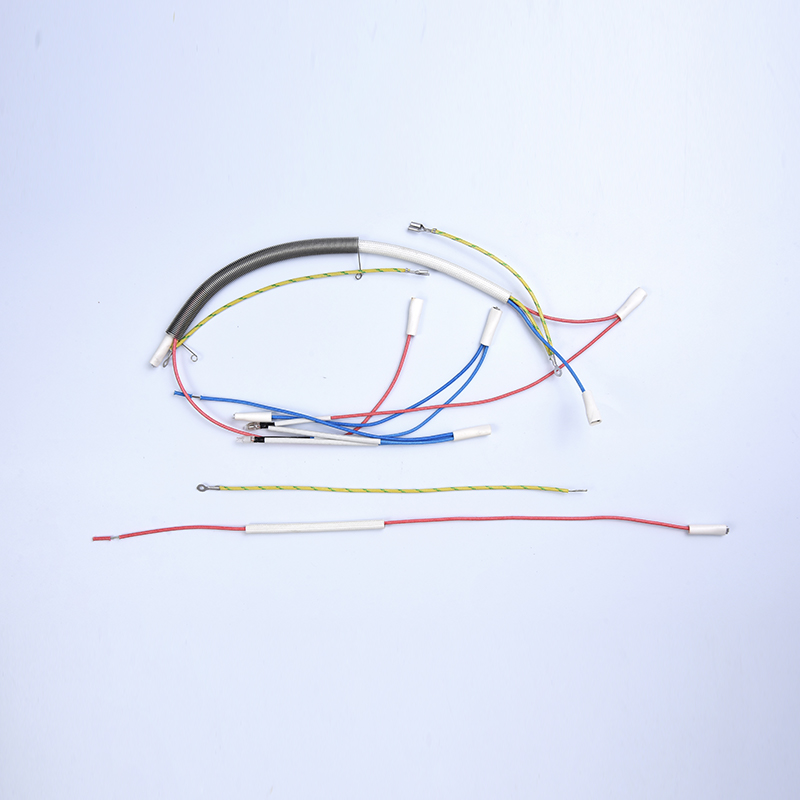
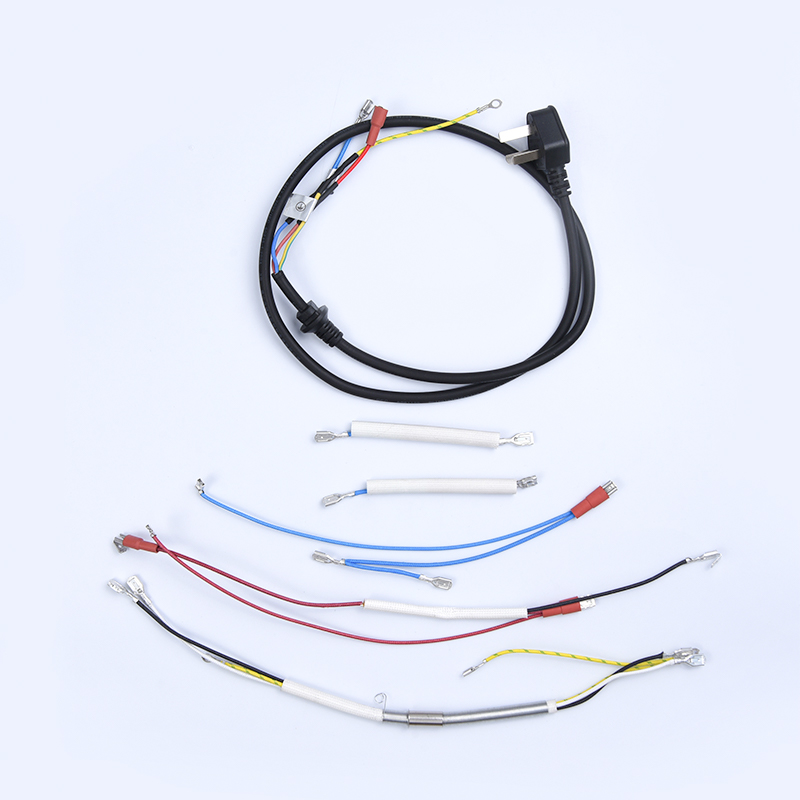
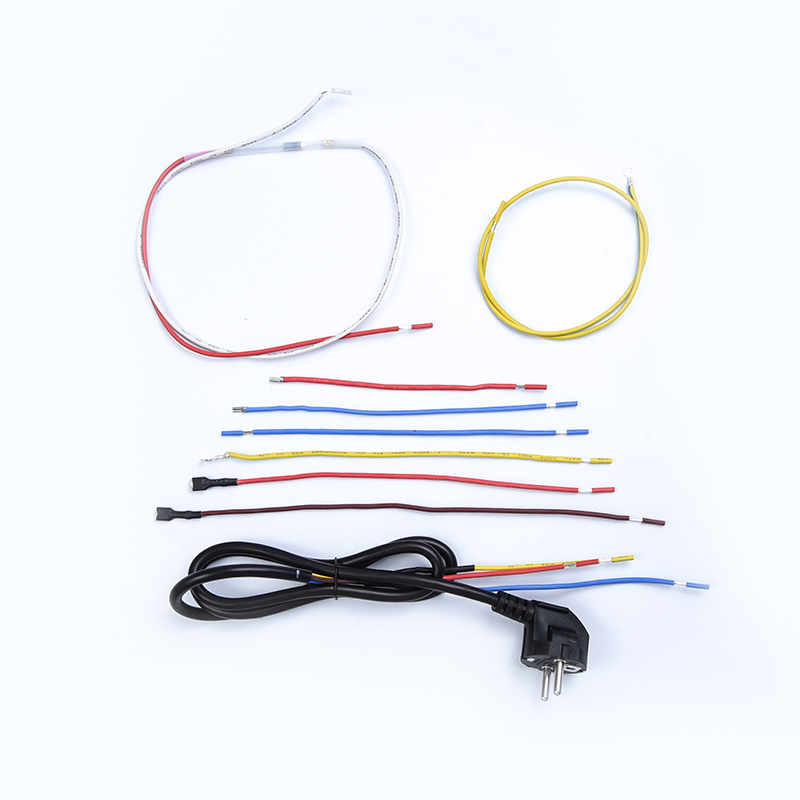
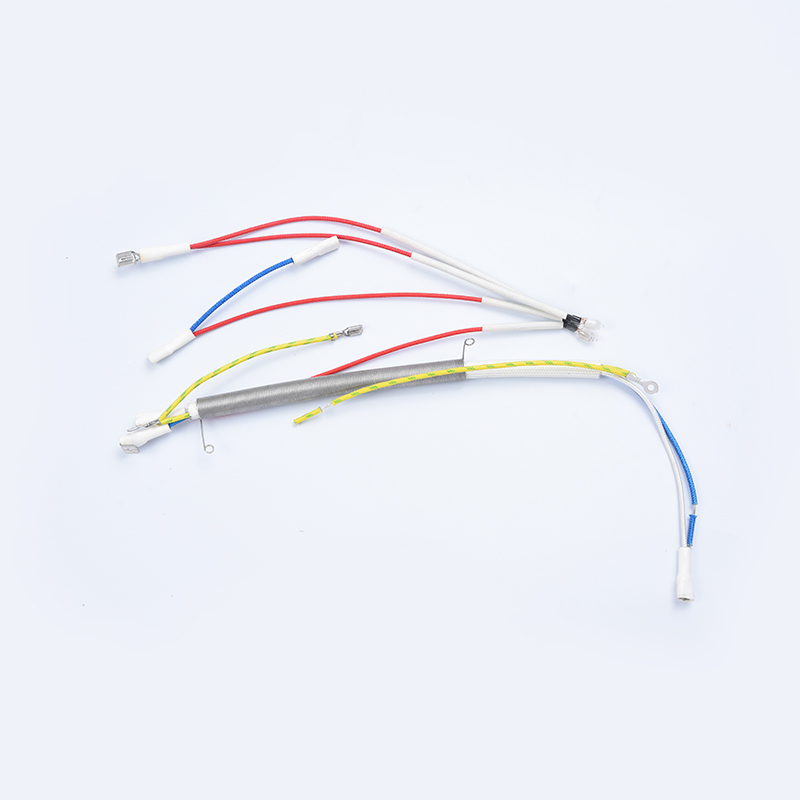
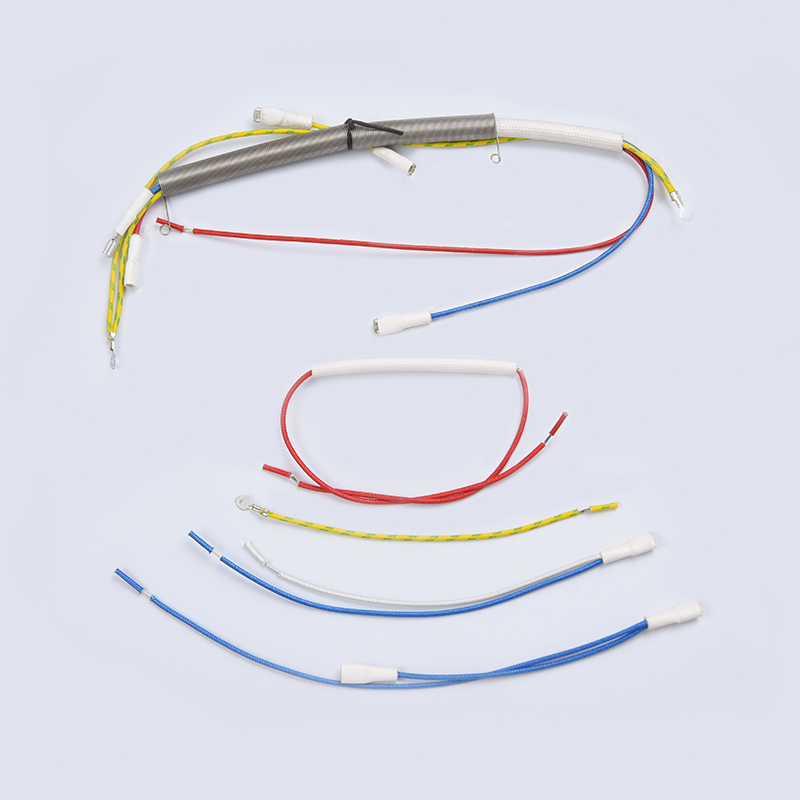
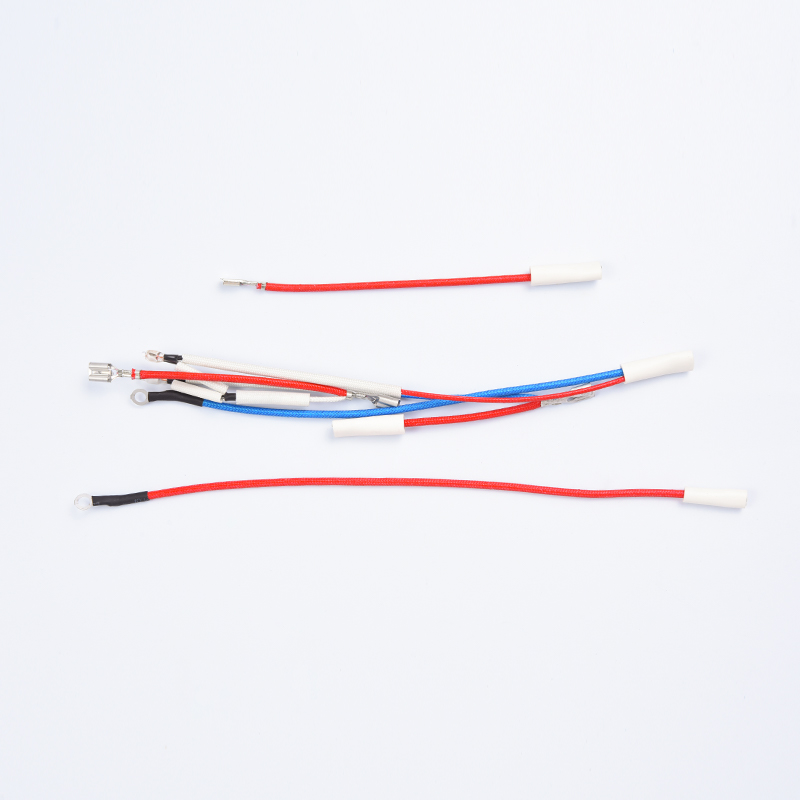
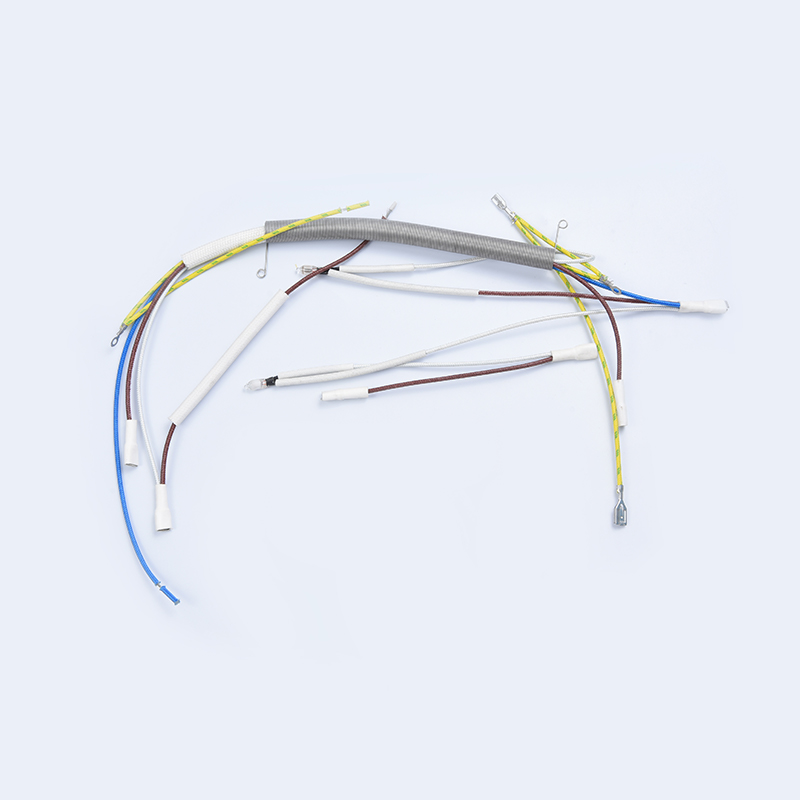
The sensor has to work as part of a complete electrical circuit. Loose terminals, thin conductors, or poor connector placement can add resistance and create noise that confuses the controller. In practice, an NTC sensor and its wiring harness are developed together, because the sensor lead wire, connector, and the harness that connects to the control board need to match in gauge, insulation rating, and terminal crimp quality. This is where pairing the sensor with a carefully specified kitchen appliance wiring harness reduces assembly errors and field failures.
A Practical Sourcing Approach
Start with a clear thermal budget for the food processor. Define the maximum allowable motor winding temperature or food temperature, then select an NTC sensor with a thermal time constant that can react quickly enough. Ask for samples of the exact probe assembly, not just a bare thermistor. Mount the samples in your housing, run over-temperature and endurance tests, and compare the shutoff temperatures to the design target.
When the samples pass, verify that the factory can deliver the same tolerance in production. Incoming inspection should measure R25 and B value on a small sample from each batch. If possible, check insulation resistance after humidity conditioning. These steps take time, but they prevent the kind of intermittent failures that are difficult to trace in a finished appliance.
Bottom Line
The right food processor NTC temperature sensor is not just the one with the right package size or the lowest price. It is the one with a matched resistance curve, a probe that fits the mechanical envelope, lead wires that survive vibration, and a factory that proves batch consistency. Define the thermal requirements before you request a quote, and test the exact assembly before you approve production. You will reduce rework, warranty returns, and the number of food processors that stop working in the middle of a busy kitchen.