+86-0574-63316601


 中文简体
中文简体Content
- 1 What the NTC Temperature Sensor in Your Air Fryer Actually Does
- 2 Why this one small part controls the whole cooking process
- 3 How resistance falling as heat rises actually works
- 4 Reading the resistance-versus-temperature spec table
- 5 Signs your air fryer's temperature sensor has failed
- 6 Testing a suspect sensor with a multimeter before replacing it
- 7 Choosing a replacement that actually matches your model
- 8 The takeaway
Component Reference
What the NTC Temperature Sensor in Your Air Fryer Actually Does
How this small thermistor controls cooking temperature, what its resistance values mean, and how to tell when it has failed.
NTC
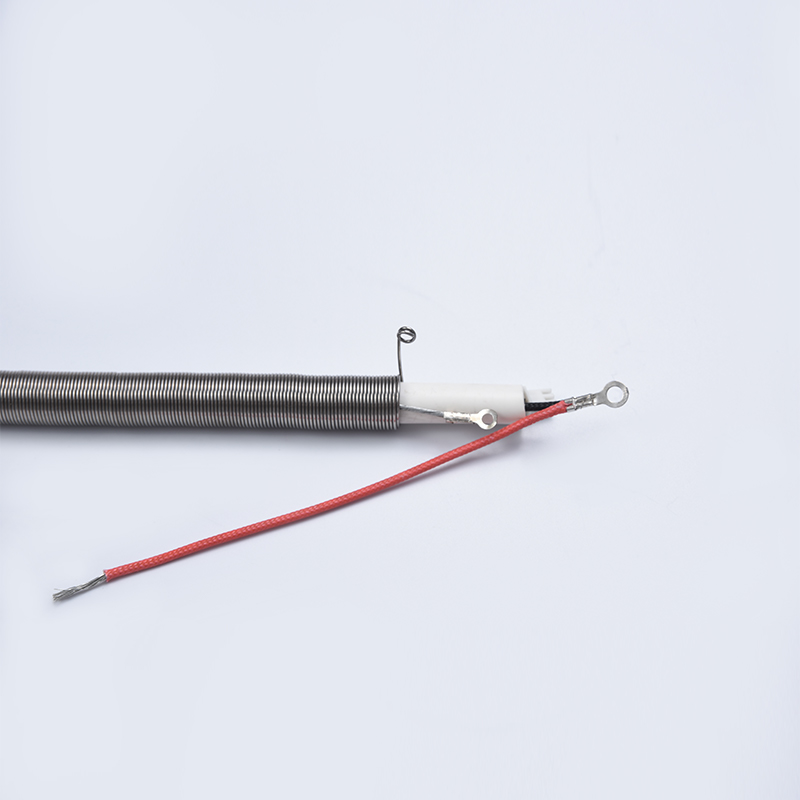
An Air Fryer NTC Temperature Sensor is a thermistor that reports the internal cooking temperature to the control board by changing its electrical resistance as heat rises — resistance drops as the chamber gets hotter, which is exactly what "NTC" (Negative Temperature Coefficient) describes. The board reads that resistance, compares it to your target setting, and cycles the heating element on and off to hold the temperature steady. Most air fryer NTC sensors are rated at 100 kΩ or 200 kΩ at 25°C, and when one drifts or fails, the fryer typically won't heat properly or throws a temperature-related error code.
Why this one small part controls the whole cooking process
An air fryer's basic job is deceptively simple: blow hot air around food fast enough to crisp it without deep frying. But "hot air at the right temperature" only works if something inside the unit is constantly measuring how hot that air actually is and reporting it back dozens of times a second. That's the entire function of the NTC sensor — it's the only component in the appliance that tells the control board what temperature the chamber is really at, as opposed to what temperature you asked for.
Without an accurate reading from this sensor, the control board is flying blind. It would either keep the heating element on continuously (risking scorched food or a tripped thermal fuse) or cycle it on a fixed timer with no regard for actual conditions, producing wildly inconsistent results between an empty preheated basket and one packed with cold food.
100–200 kΩ
Typical resistance at 25°C
3950K
Common B-value (thermal sensitivity rating)
-30 to 200°C
Typical operating range
How resistance falling as heat rises actually works
The "negative temperature coefficient" name is the whole mechanism in three words: as temperature goes up, resistance goes down. This is the opposite of how a standard resistor behaves, and it's a direct physical property of the ceramic metal-oxide semiconductor material the thermistor bead is made from. As the chamber heats, thermal energy frees more charge carriers inside that material, and the sensor's resistance falls in a smooth, predictable curve.
Illustrative resistance curve — 100 kΩ NTC sensor
25°C
100 kΩ
100°C
~7 kΩ
180°C
~1 kΩ
Approximate values for a common 100 kΩ, B=3950K thermistor. Exact figures vary by manufacturer and B-value rating — always check the specific part's datasheet before diagnosing a fault.
The control board doesn't need to know the underlying physics — it just reads voltage across the thermistor (which changes as resistance changes), converts that to a temperature using a stored lookup curve, and compares it against your dial or display setting. This is why the B-value matters: it's a standardized number describing how steep that resistance-to-temperature curve is, and a replacement sensor with the wrong B-value will report inaccurate temperatures even if its 25°C resistance matches.
Reading the resistance-versus-temperature spec table
If you're sourcing a replacement sensor or trying to verify one with a multimeter, these are the numbers that actually matter on a datasheet or product listing:
| Spec | What it means | Typical air fryer value |
|---|---|---|
| R25 | Resistance at 25°C room temperature — the baseline value | 100 kΩ or 200 kΩ |
| B-value | How steeply resistance falls as temperature rises | 3950K (also seen: 3435K, 3950K, 4050K) |
| Tolerance | How much variance is acceptable from the rated R25 value | ±1% to ±5% |
| Operating range | Temperatures the sensor can accurately measure without damage | -30°C to 200°C |
| Housing | Physical protection for the thermistor bead | Glass-sealed or stainless probe |
A glass-sealed bead is the most common housing for the actual sensing element because it can survive repeated cycles from room temperature up past 180°C without cracking, while a stainless steel probe tip protects that glass bead from physical knocks during cleaning or food contact.
Signs your air fryer's temperature sensor has failed
Because the NTC sensor is the control board's only source of temperature information, its failure modes tend to look like general cooking inconsistency rather than an obvious dead component. These are the patterns that specifically point to the sensor rather than the heating element or a blown fuse:
- The unit won't reach the set temperature, or takes far longer than it used to, even with the basket empty.
- Cooking results are inconsistent between identical runs — same food, same setting, noticeably different results, suggesting the reported temperature doesn't match the actual chamber temperature.
- A temperature-specific error code appears shortly after power-on, often within the first minute of operation.
- The display shows an unusually high or negative temperature reading that clearly doesn't match reality — a classic sign of an open or shorted sensor circuit.
- The unit runs briefly, then shuts off or errors out repeatedly, sometimes recoverable by power-cycling, which suggests an intermittent connection at the sensor rather than a fully dead part.
What this is not: a heating element that never gets warm at all, a fan that doesn't spin, or a completely dead display usually point to the heating coil, fan motor, or power supply instead — the NTC sensor's failure signature is almost always about temperature accuracy and consistency, not total lack of power.
Testing a suspect sensor with a multimeter before replacing it
Confirming an NTC fault before ordering a replacement part takes a few minutes and avoids paying for parts you don't need:
- Unplug the unit completely and let it cool to room temperature before opening the casing or handling the sensor.
- Locate the sensor probe, typically mounted near the heating element or protruding into the cooking chamber, connected by two wires to the control board.
- Disconnect the sensor from its connector and set a multimeter to the resistance (Ω) setting.
- Measure resistance at room temperature and compare the reading against the rated R25 value — a 100 kΩ sensor should read close to 100 kΩ, not near zero or infinite.
- Apply gentle heat with a heat gun or lighter held at a safe distance and confirm the reading falls steadily as the probe warms — a sensor that shows no change, jumps erratically, or reads open-circuit (infinite resistance) has failed.
±1–5%
Typical acceptable tolerance on a new sensor's rated resistance — a reading noticeably outside that band at room temperature is a strong sign of drift or failure, even if the sensor still technically produces a signal.
Choosing a replacement that actually matches your model
Air fryer NTC sensors look nearly identical across brands, but a mismatched replacement will cause the same inconsistent-cooking symptoms as the failed original, just for a different reason: the control board's stored lookup curve won't match the new part's actual resistance behavior.
Match these three values, not just the connector shape: the R25 resistance (100 kΩ and 200 kΩ are the two most common in air fryers and are not interchangeable), the B-value rating, and the physical probe length or housing style so it reaches the same position in the cooking chamber as the original.
If the original part number is unreadable or unavailable, measuring the old sensor's resistance at a known room temperature before discarding it is the most reliable way to identify which rated value it used — a reading near 100 kΩ points to a 100 kΩ replacement, and a reading near 200 kΩ points to a 200 kΩ part, regardless of what a generic listing claims.
The takeaway
The NTC temperature sensor is a small, inexpensive part with an outsized job: it's the only thing telling an air fryer's control board what temperature the cooking chamber is actually at. Its resistance falls predictably as heat rises, following a curve defined by its R25 value and B-rating, and the control board uses that curve to hold your set temperature steady. When it fails, the symptoms look like general cooking inconsistency rather than a dead machine — inaccurate temperatures, uneven results, or a temperature-related error code. A multimeter check against the rated resistance value is usually enough to confirm the fault before buying a replacement, and matching R25, B-value, and probe length is what separates a proper fix from a part that merely fits the connector.